What happens in the rumen of dairy cows impacts feed digestion and use, and one key indicator of the rumen’s state is its pH. Rumen pH naturally rises and falls over the course of the day, especially around feeding. That movement is normal. However, problems tend to develop when pH drops too far or stays low for too long. When that happens, the rumen environment can become less favorable for normal fermentation, particularly for the microorganisms involved in fiber digestion.
For dairy producers, nutritionists, veterinarians, and researchers, monitoring rumen pH can provide a useful view of how ration composition, feeding behavior, and management practices affect the cow. Subacute ruminal acidosis is not uncommon in modern dairy production. A 2024 review in the Journal of Dairy Science reported prevalence estimates of 10% to 26% in early-lactation cows, underscoring why rumen pH management remains an important consideration in dairy herd health and nutrition.
What Is Rumen pH?
Rumen pH describes how acidic or alkaline the fluid inside the rumen is. The rumen is essentially a large fermentation chamber, where microorganisms break down feed, including fiber and carbohydrates, and produce volatile fatty acids as part of that process. Those acids are important because they provide a major source of energy for the cow. At the same time, they also lower rumen pH. And this is why pH often drops after feeding.
Why Does Rumen pH Matter in Dairy Cows?
Rumen pH matters because the microorganisms responsible for digestion do not all perform equally well under the same conditions. Some of the organisms involved in fiber digestion are especially sensitive to lower pH. As the rumen becomes more acidic, their activity can decline. Over time, that can affect how efficiently a cow digests forage and uses nutrients from the ration.
Effects on Feed Intake and Milk Performance
Low rumen pH is also associated with changes in feed intake, feed efficiency, and milk performance. Although the response is not identical in every cow, prolonged periods of low pH can contribute to lower dry matter intake and changes in milk composition, particularly milk fat. In one field study of early-lactation cows, animals classified as lower risk for SARA (Subacute Ruminal Acidosis) produced 47.2 kg/day of 4% fat-corrected milk compared with 41.9 kg/day in higher-risk cows, while milk fat yield was 2.1 versus 1.8 kg/day. Total milk yield did not differ significantly between groups.
Subacute Ruminal Acidosis
One common concern tied to persistently low rumen pH is subacute ruminal acidosis, or SARA. Unlike acute acidosis, SARA does not always produce dramatic or obvious symptoms. In many cases, cows may continue eating and producing while showing more subtle signs.
These can include reduced rumination, inconsistent feed intake, loose manure, changes in milk fat, or declining body condition. None of these signs alone confirms SARA. Rather, they are reasons to look more closely at the ration, feeding behavior, and rumen conditions.
What Causes Low Rumen pH?
Low rumen pH usually develops when acid production happens faster than the rumen can absorb or buffer them. Several factors can contribute to this.
A diet high in rapidly fermentable carbohydrates can cause acid production to increase quickly. That does not mean starch is inherently a problem; rather, it highlights the need to consider the amount, source, and rate of fermentation. Effective fiber is equally important. Longer fiber particles encourage chewing and rumination, which increases saliva production and helps buffer rumen acidity.
Feed sorting can also create problems. A total mixed ration may be properly formulated on paper, but if cows preferentially consume finer, more concentrated particles while leaving longer forage behind, the ration they actually consume may contain more fermentable carbohydrates and less effective fiber than intended. Penn State Extension notes that this type of sorting can increase the risk of metabolic problems, including subacute ruminal acidosis.
The risk is influenced by more than ration formulation alone. The Merck Veterinary Manual identifies excessive rapidly fermentable carbohydrates, inadequate physically effective fiber, large meals, feed deprivation, and poor adaptation to higher-grain diets as factors that can contribute to SARA. Heat stress and changes in feeding behavior can further complicate intake patterns, particularly during warm weather.
What Is a Desirable Rumen pH Range?
No single rumen pH number applies to every cow in every situation because it varies by diet, time after feeding, stage of lactation, sampling location, and measurement method. However, most studies see values between 6.0 and 7.0 as an optimal range to support effective digestion and microbial populations.
How to Measure Rumen pH?
There is more than one way to measure rumen pH, and each method has practical advantages and limitations.
- Rumenocentesis involves collecting rumen fluid directly through the body wall and is generally carried out by trained veterinary professionals.
- Oral or stomach-tube sampling is less invasive, but the result can be influenced by where the sample is taken and by possible contamination with saliva.
- Rumen cannulas are surgically installed access ports that allow researchers to collect rumen contents and take direct measurements from inside the rumen.
For longer-term observation, continuous pH sensors or sensor boluses, which are ingestible monitoring devices that remain inside the cow, can record measurements throughout the day. This can be especially useful because a single reading may miss the lowest point in the daily pH cycle. Continuous monitoring provides a fuller picture of average and minimum pH, time spent below a selected threshold, post-feeding changes, recovery time, and day-to-day variation.
How To Manage Rumen pH?
Managing rumen pH depends on balanced rations and consistent feeding practices. Adequate physically effective fiber supports chewing, saliva production, and natural buffering, while starch and other fermentable carbohydrates should be carefully balanced. Introduce ration changes gradually to allow rumen microorganisms to adapt, and proper total mixed ration preparation can help reduce feed sorting. Consistent feed access also helps limit large pH swings. Dietary buffers such as sodium bicarbonate may support some feeding programs but should not replace sound ration management. Suspected acidosis should be evaluated by a qualified dairy nutritionist or veterinarian.
Monitoring pH With AlpHa Measurement Solutions
Whether pH is measured in research, agricultural monitoring equipment, or collected liquid samples, the quality of the reading depends heavily on matching the sensor to the application. Factors such as response time, temperature range, reference-system design, housing material, calibration, and output requirements can all affect how well a sensor performs under real-world conditions.
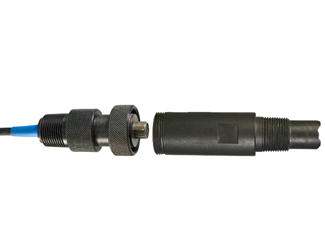
AlpHa Measurement Solutions develops and manufactures pH sensing technologies for a wide range of liquid measurement applications. Available options include:
- Measurement across the 0 to 14 pH range.
- Accuracy options of ±0.02 pH.
- Response times as fast as 10 seconds.
- Low-drift configurations.
- Operating temperatures from -5°C to 135°C.
- Single- and double-junction reference systems.
- Customizable electrolytes and sensor geometries.
- Custom mechanical assemblies.
- Analog and digital outputs, including millivolt, 4–20 mA, and RS-485 MODBUS RTU.
AlpHa’s approach doesn’t force one sensor into every application. We work with customers to test, validate, and refine sensing solutions around specific measurement needs.
For agricultural researchers, laboratories, and others who need pH monitoring technology, that flexibility can be especially valuable when sensor design, materials, form factor, or electronic integration must be adapted to the application.
Contact us to discuss standard pH sensor options or a customized sensing solution for your agricultural, research, or OEM application.