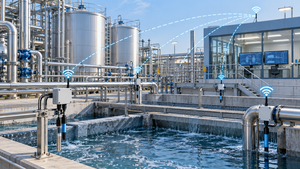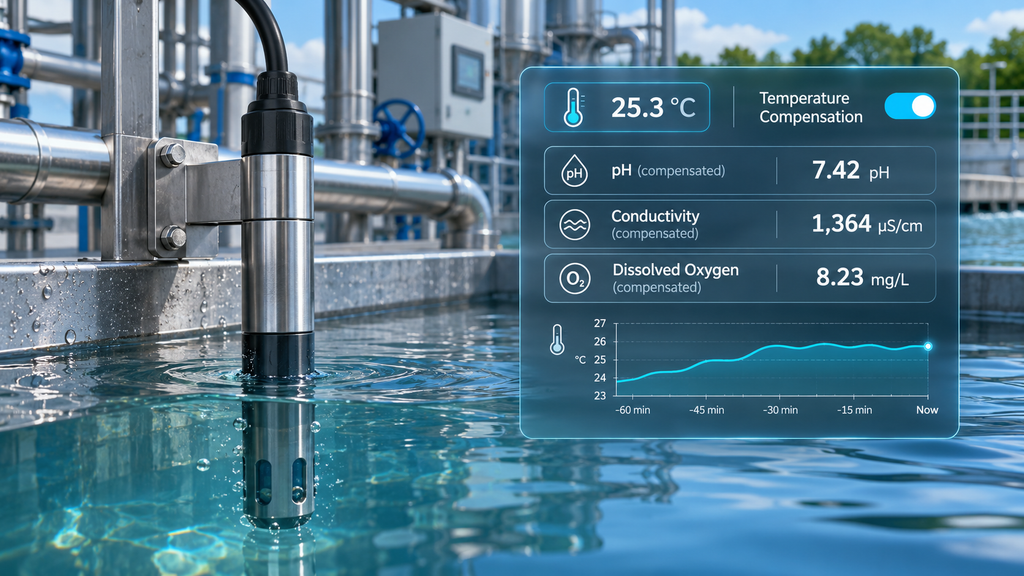
Accurate water quality measurements are essential for process control, environmental monitoring, and industrial operations. Yet temperature can affect measurement accuracy. As water temperatures fluctuate, they can change both the sample’s properties and how sensors respond. For parameters such as pH, conductivity, and dissolved oxygen (DO), these effects can complicate the interpretation of measurement results. Automatic temperature compensation (ATC) helps instruments account for predictable changes in sensor response, thus providing more dependable readings under varying conditions.
How Temperature Affects Water Quality Measurements
Temperature affects several physical and chemical properties of water, including ionic mobility, dissolved gas solubility, and chemical equilibria. However, its effect on measurement accuracy depends on the measurement parameter and the sensor technology in use.
pH Sensors
pH electrodes measure hydrogen ion activity through an electrical potential that changes with temperature. The Nernst equation describes this relationship by defining the theoretical response (E) of an electrochemical sensor as follows:

As temperature (T) changes, so does the electrode’s response. Without compensation, this variation can introduce errors into the calculated pH value.
Temperature compensation adjusts for the electrode’s changing response, allowing the instrument to calculate pH more accurately. However, it does not correct for actual changes in the sample’s pH caused by temperature-dependent chemical reactions. Those changes reflect the chemistry of the solution rather than a measurement error.
Conductivity Sensors
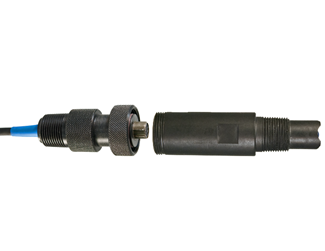
Conductivity measures water’s ability to carry an electrical current, which depends on the concentration and mobility of dissolved ions. As temperature rises, ions generally move more freely, increasing conductivity even when the concentration of dissolved substances remains unchanged. This makes it difficult to compare readings collected at different temperatures.

To address this, conductivity instruments like AlpHa’s Van London offering commonly apply temperature correction to express measurements at a reference temperature, typically 25°C. This standardized value, known as specific conductance, allows for more meaningful comparisons.
Temperature Compensation in Dissolved Oxygen Sensors
Temperature affects dissolved oxygen measurements in two ways. First, warmer water generally holds less dissolved oxygen at equilibrium than cooler water under otherwise equivalent conditions.
Second, temperature influences the response of DO sensors. Electrochemical sensors, for example, can be affected by changes in membrane permeability and electrode behavior. Optical DO sensors also require temperature correction because their sensing chemistry responds differently at varying temperatures.
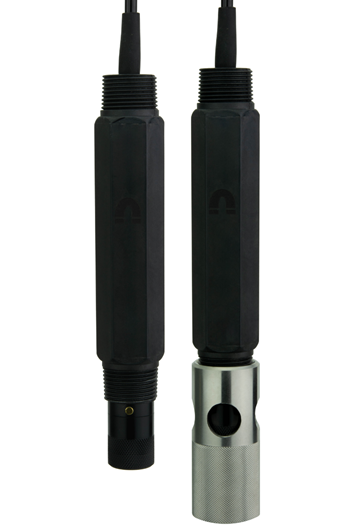
Temperature compensation accounts for these sensor-related effects, helping instruments produce accurate readings as conditions change. Depending on the application, salinity and pressure must also be considered.
How Automatic Temperature Compensation Works
Automatic temperature compensation uses a temperature sensor to measure the sample’s temperature and provide that information to the measurement instrument. The instrument then applies a correction based on the analytical sensor’s characteristics. This temperature measurement is usually via an integrated sensing element or a separate probe. Two common technologies are negative temperature coefficient (NTC) thermistors and resistance temperature detectors (RTDs).
NTC thermistors are usually made of compressed and heated ceramic semiconductor materials. As the components heat up, thermal energy excites more electrons into the conduction band, allowing electrical current to flow more easily and dropping the resistance value. The resistance value is correlated to a temperature value. An RTD, on the other hand, is a temperature sensor that measures heat by correlating the change in electrical resistance of a pure metal element, most commonly platinum.
Unlike manual compensation, which requires operators to enter a measured temperature, ATC continuously updates the temperature input as conditions change. This is particularly useful for online monitoring systems where manual adjustments would be impractical.
However, temperature compensation is only as effective as the system implementing it. Sensor placement, response time, calibration, and the correction method all influence measurement accuracy. For example, when water temperature changes rapidly, a slow-responding temperature probe may not reflect the conditions at the analytical sensor.
It is also important to recognize that compensation methods are specific to each measurement parameter. A correction suitable for conductivity cannot simply be applied to pH or dissolved oxygen. Each requires an approach based on its underlying measurement principles.
Where Temperature Compensation Matters Most
Temperature compensation is valuable wherever water temperatures change during normal operations or when measurements must be compared across different conditions.
In wastewater treatment, seasonal variations, incoming flows, and biological processes can influence water temperature. Accurate pH and dissolved oxygen measurements help operators monitor treatment conditions and make informed process adjustments.
For environmental monitoring, rivers and lakes experience temperature changes throughout the day and across seasons. Compensated measurements help distinguish temperature-dependent sensor effects from changes occurring in the water itself.
In industrial applications, including chemical manufacturing, petrochemical processing, and food and beverage production, heating, cooling, and changes in process fluids can create variable measurement conditions. Accounting for temperature helps maintain consistent monitoring across these operations.
Laboratory testing also benefits from temperature compensation, particularly when measuring samples and calibration solutions at different temperatures. Recording sample temperature alongside analytical results provides additional context for interpreting and comparing measurements.
Although these applications have different operating requirements, they share a common need: measurement systems that can distinguish genuine changes in water quality from temperature-related effects on the sensor.
Temperature Measurement Solutions From AlpHa
Accurate temperature compensation begins with selecting a temperature sensing technology suited to the measurement system and its operating environment.
At AlpHa Measurement Solutions, we develop and manufacture liquid analytical sensors for water quality, industrial, environmental, and laboratory applications.
Our temperature sensor portfolio includes NTC thermistors and RTDs in integrated and standalone configurations. Custom housings, form factors, and connectors let customers incorporate temperature sensing elements into a range of analytical systems.
AlpHa also offers compatible instrumentation with automatic temperature compensation capabilities, including optical dissolved oxygen measurement solutions.
Through our engineering and product development expertise, we work with customers to address specific requirements for sensor integration, operating conditions, and measurement performance. This approach helps ensure that the temperature sensing technology and analytical sensor are appropriately matched to the application.
Looking for a temperature sensing solution for your application? Explore AlpHa’s temperature sensor capabilities or contact our team to discuss your measurement requirements.