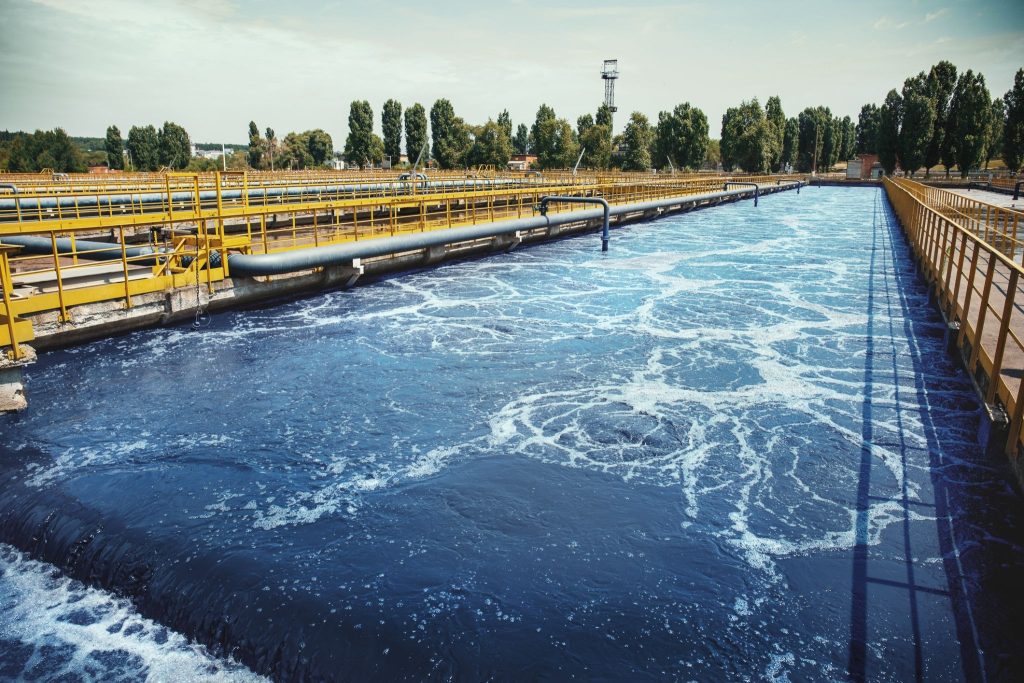
Water quality monitoring has evolved far beyond basic parameters like turbidity, pH, and conductivity. While these indicators remain essential, they often fail to identify the source of contamination. As a result, utilities and environmental professionals increasingly rely on more targeted indicators to understand what is truly happening in their water systems. Among these, optical brighteners have emerged as one of the most effective tracers of human activity. This article explores what optical brighteners are, how they enter water systems, and why they serve as powerful indicators of wastewater intrusion, detergent contamination, and anthropogenic pollution. It also examines how modern sensing technologies enable continuous monitoring, helping operators detect contamination early and respond with confidence.
What Are Optical Brighteners?
Optical brighteners, or fluorescent whitening agents, are synthetic organic compounds common in everyday products. Manufacturers add them to detergents, paper, textiles, and plastics to enhance brightness and improve visual appearance. These compounds work by absorbing ultraviolet light and re-emitting it as visible blue light, which makes materials appear cleaner and whiter. Although their function is cosmetic, their environmental significance is substantial. Optical brighteners are not naturally present in significant concentrations in pristine water bodies. Therefore, when they appear in rivers, lakes, or groundwater, they almost always indicate contamination linked to human activity. From a monitoring perspective, this characteristic makes optical brighteners highly valuable. Unlike general organic indicators, which may originate from both natural and anthropogenic sources, optical brighteners provide a much clearer signal. They act as a direct fingerprint of wastewater influence, particularly from domestic sources.
How Optical Brighteners Enter Water Systems
Optical brighteners enter water systems through multiple pathways, most of which are tied to human infrastructure and behavior. Domestic wastewater is one of the primary sources. When people wash clothes using detergents containing brighteners, these compounds enter sewage systems. Ideally, wastewater treatment plants remove or reduce these substances before discharge. However, treatment processes are not always fully effective, especially under high load conditions.
In addition, infrastructure limitations can allow untreated or partially treated wastewater to reach natural water bodies. Combined sewer overflows during storm events, leaking sewer lines, and aging infrastructure all contribute to this issue. As a result, optical brighteners can bypass treatment and enter rivers and streams. Stormwater runoff represents another significant pathway. Urban areas often carry residues from detergents, car washes, and industrial cleaning activities. During rainfall events, this runoff transports optical brighteners directly into surface waters without treatment. Septic system leakage also plays a role, particularly in rural or peri-urban areas. Faulty or overloaded septic systems can release wastewater into surrounding soils, where optical brighteners may eventually migrate into groundwater. Because these pathways are widespread, optical brighteners can appear in a variety of water systems. However, their presence consistently points to human-derived contamination.
Why Optical Brighteners Are Strong Indicators of Wastewater Contamination
Not all contaminants provide clear diagnostic value. Some parameters, such as dissolved organic carbon or turbidity, indicate that something has changed, but they do not clearly identify the source. Optical brighteners, however, offer a more definitive signal.
First, they are strongly associated with domestic wastewater. Since they are primarily used in household detergents and cleaning products, their presence often correlates with sewage input. This makes them particularly useful for identifying wastewater intrusion in surface waters and groundwater systems.
Second, optical brighteners tend to persist long enough to be detected downstream. Although they degrade over time, especially under sunlight, they remain stable in many environments long enough to trace contamination pathways. This persistence allows operators to track pollution sources over distance.
Third, they are detectable at very low concentrations using fluorescence-based sensors. Even trace amounts can produce measurable signals, enabling early detection of contamination events that might otherwise go unnoticed.
Because of these characteristics, optical brighteners serve as a reliable tool for distinguishing between natural organic matter and human-derived pollution. This distinction is critical for effective water management and regulatory compliance.
Comparison to Traditional Water Quality Parameters
Traditional water quality parameters still play an important role, but they have limitations when used alone. Turbidity measures suspended particles, yet it cannot differentiate between sediment from erosion and contaminants from wastewater. Similarly, conductivity indicates the presence of dissolved ions, but it does not reveal their origin.
Biochemical oxygen demand and chemical oxygen demand provide insight into organic loading, but they require laboratory analysis and do not offer real-time feedback. Moreover, they reflect overall organic content rather than specific sources of contamination.
In contrast, optical brighteners provide targeted information. They indicate the presence of human-derived substances, allowing operators to quickly identify whether wastewater intrusion is occurring. When used alongside traditional parameters, they enhance interpretation and improve decision-making. For example, an increase in turbidity combined with elevated optical brighteners strongly suggests contaminated runoff or sewage intrusion. Without optical brightener data, the same increase in turbidity might be misinterpreted as a natural sediment event.
Environmental and Operational Implications
The presence of optical brighteners in water systems has both environmental and operational implications. From an ecological standpoint, their detection often signals broader contamination issues. Wastewater intrusion typically carries not only detergents but also nutrients, pathogens, and other pollutants. Therefore, optical brighteners act as a proxy for a wider range of contaminants.
In aquatic ecosystems, these pollutants can disrupt biological processes. Nutrient loading may lead to algal blooms, while pathogens pose risks to wildlife and human health. Over time, repeated contamination events degrade ecosystem resilience and biodiversity.
From an operational perspective, optical brighteners help utilities identify vulnerabilities in their systems. For example, detecting brighteners in source water may indicate upstream sewage leaks or stormwater issues. In groundwater systems, their presence may reveal failing septic systems or infiltration from surface sources.
By identifying these problems early, operators can take corrective action before conditions worsen. This proactive approach reduces treatment costs, minimizes regulatory risk, and protects public health.
The Role of Fluorescence in Detecting Optical Brighteners
Fluorescence-based sensing is the foundation of optical brightener detection. The principle is straightforward yet highly effective. Optical brighteners absorb light at specific ultraviolet wavelengths and emit light at longer wavelengths. Sensors measure this emitted light to determine the concentration of brighteners in the water.
One of the key advantages of fluorescence is sensitivity. Sensors can detect compounds at parts-per-billion levels, making them suitable for early detection. In addition, fluorescence measurements occur almost instantly, allowing for real-time monitoring. This capability represents a significant shift from traditional sampling methods. Instead of relying solely on periodic laboratory analysis, operators can continuously monitor water quality. As a result, they gain immediate visibility into changing conditions. Moreover, fluorescence sensors can operate in a wide range of environments. Whether deployed in rivers, reservoirs, or treatment plants, they provide consistent and reliable data. This flexibility makes them a valuable tool for both environmental monitoring and process control.
AlpHa Optical Brighteners Fluorometer: Reliable Insight into Wastewater Contamination
AlpHa’s Optical Brighteners Fluorometer, model XC-OBS101-SD, delivers accurate and stable detection of fluorescent whitening agents, enabling reliable identification of wastewater contamination and human activity in water systems. Using continuous excitation fluorescence and a refined optical design, the sensor ensures consistent measurements suitable for long-term monitoring and regulatory compliance.
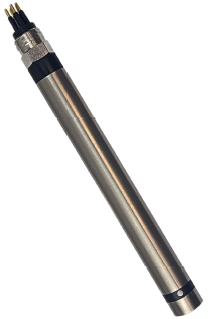
To maintain accuracy in dynamic environments, the probe features an industry-leading minimum detection limit of <0.08 ppb, which allows operators to detect trace contamination well before conditions become visible or operationally significant. In addition, the sensor provides strong linearity (R² > 0.99) across its measurement range, supporting dependable trend analysis and reporting. Other features include:
- Measurement Range: 0 to 300 ppb.
- Fast Response Time: ~2 seconds for both sonde and stand-alone models.
- Automatic Temperature Compensation for stable readings from 0 to 50°C.
- Max Pressure Rating: 375 m, ideal for submerged and field deployments.
- Excitation / Emission Optics: 365 nm LED / 445 nm detection band.
- Flexible Outputs: Analog 0–3 V or digital RS-485 MODBUS RTU.