Not All Oil Looks the Same to a Sensor
In many industrial systems, oil-in-water measurement is treated as a single variable that represents contamination. In reality, that number is heavily influenced by how oil exists within the water column. Two systems with identical oil concentrations can produce dramatically different readings depending on whether the oil is free-floating or emulsified. This distinction is where many measurement challenges begin. Free oil and emulsified oil behave differently, interact differently with sensing technologies, and ultimately require different approaches to achieve reliable, repeatable data. Understanding that difference is essential for anyone responsible for water quality, process optimization, or environmental monitoring. This article reviews the differences between free oil vs emulsified oil, the causes of measurement errors, and how to match sensor technologies to oil type.
Understanding Oil Behavior in Water
At a high level, oil in water exists along a spectrum. On one end, you have clearly separated oil droplets. On the other hand, oil is finely dispersed and chemically stabilized within the water itself.
Free Oil: Larger Droplets, Clear Separation
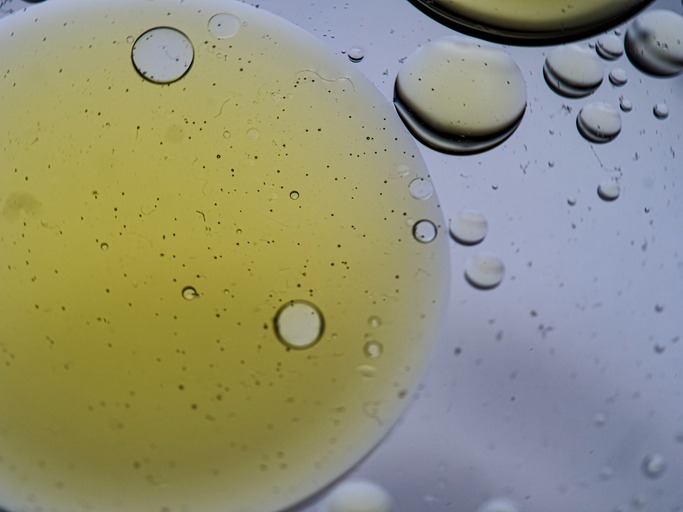
Free oil refers to hydrocarbons that exist as relatively large droplets or visible layers. These droplets tend to rise to the surface due to density differences and are not chemically bonded to the surrounding water. Because of this, free oil is often easier to detect. Larger droplets reflect and scatter light more effectively, producing stronger signals for many optical sensing technologies. In systems like separators or calm tanks, free oil can be monitored with reasonable consistency, provided the sensor is positioned correctly. However, even free oil introduces variability. Surface movement, turbulence, and uneven distribution can all impact measurement reliability. A sensor placed slightly too deep or too shallow may produce inconsistent readings simply because the oil layer is not uniform.
Emulsified Oil: Small Droplets, Stable Suspension
Emulsified oil presents a far more complex challenge. In this state, oil is broken down into extremely fine droplets, often less than 20 microns in size, and stabilized by surfactants or mechanical forces such as pumping and mixing. Unlike free oil, emulsified oil does not separate or rise. Rather, it remains suspended throughout the water column, creating a uniform but difficult-to-detect distribution. From a measurement perspective, this changes everything. Smaller droplets scatter less light, making them harder to detect with traditional optical methods. In addition, emulsified oil often coexists with other substances, such as dissolved organics or suspended solids, that interfere with measurement signals. The result is weaker, noisier data that requires more sensitive and selective detection methods.
The Reality: Most Systems Are Not One or the Other
While it is helpful to define free and emulsified oil separately, most real-world applications contain a mixture of both. Oil can transition between states depending on operating conditions.
- Increased turbulence can break free oil into emulsions.
- Also, chemical dosing can stabilize or destabilize droplets.
- Temperature changes can alter oil viscosity and behavior.
This dynamic nature means that oil-in-water measurement is not static. Because a system that behaves like a free oil application one day may behave like an emulsified system the next. Hence, sensors must be able to respond to these changes or risk producing misleading data.
Why Measurement Errors Happen in Free Oil vs Emulsified Oil
When oil behavior is not properly accounted for, measurement errors are almost inevitable. These errors are often attributed to sensor performance, but the root cause is frequently a mismatch between oil type and detection method. The following sections discuss the causes of measurement errors beyond sensor aging and improper installation, which are the most common.
Technology Mismatch
A common issue is the use of a sensor designed for free-oil detection in a system dominated by emulsified oil. Because emulsified droplets produce weaker signals, the sensor may underreport actual concentrations. The opposite can also occur. Highly sensitive sensors tuned for emulsified oil may respond to background interference in systems dominated by free oil, leading to overestimation.
Droplet Size Distribution
Not all emulsions are the same. The size distribution of oil droplets directly impacts how a sensor responds. Larger droplets produce stronger signals, while smaller droplets may fall below the detection threshold. Without understanding this distribution, it becomes difficult to interpret measurement data accurately.
Matrix Interference
Industrial water is rarely clean. Suspended solids, turbidity, and dissolved organic compounds all interact with measurement signals.
These factors can:
- Mask the presence of oil.
- Create false positives.
- Reduce signal clarity.
In emulsified systems, where signals are already weak, these interferences become even more significant.
Calibration Misalignment
Many sensors are calibrated using standardized oils under controlled conditions. In real applications, however, oil composition varies widely. Differences in crude type, additives, and process chemistry can all impact sensor response. Without application-specific calibration, even high-quality sensors can produce inaccurate results.
Matching Sensor Technology to Oil Type
Accurate measurement begins with selecting the right sensing approach for the oil present in the system.
Free Oil Applications
In systems where free oil dominates, technologies that rely on light scattering or absorption perform well. Common approaches include:
- Infrared (IR) absorption sensors: Measure oil concentration based on hydrocarbon absorption at specific wavelengths.
- Ultraviolet (UV) absorption sensors: Detect aromatic hydrocarbons through UV light attenuation.
- Nephelometric (light scattering) sensors: Quantify oil droplets by measuring scattered light intensity.
- Turbidity-based optical sensors: Provide indirect oil detection where droplet concentration significantly impacts clarity.
These methods benefit from:
- Strong signal response from larger droplets.
- Simpler detection mechanisms.
- Faster response in surface or near-surface measurements.
However, they struggle when oil becomes finely dispersed, where droplet size falls below effective detection thresholds.
Emulsified Oil Applications
For emulsified oil, more advanced optical techniques are required. Fluorescence-based sensing is particularly effective because it targets the chemical properties of hydrocarbons rather than relying solely on physical droplet size.
This allows for:
- Detection of very low concentrations.
- Sensitivity to dissolved and dispersed hydrocarbons.
- Faster response to subtle changes in oil levels.
The tradeoff is that these systems require more precise calibration and compensation for environmental factors.
Mixed Systems: The True Challenge of Free Oil vs Emulsified Oil
Most industrial environments fall into this category. Here, no single measurement principle is sufficient on its own.
Instead, successful measurement strategies rely on:
- Broad detection capabilities
- Compensation for turbidity and temperature
- Flexible calibration tailored to the application
This is where application expertise becomes critical.
AlpHa’s Crude Oil Sensor: Designed for Real-World Oil Variability
Accurate oil-in-water measurement requires more than sensitivity; it requires stability, adaptability, and confidence across changing conditions. AlpHa’s crude oil fluorometer is engineered to address both free and emulsified oil challenges by combining high sensitivity with robust, real-world performance.

Highly Sensitive Fluorescence Detection
Using continuous excitation fluorescence, AlpHa’s sensor detects crude oil at concentrations as low as 0.2 ppb.
Benefit:
- Captures emulsified and dissolved hydrocarbons that other technologies miss.
- Enables early detection of subtle process changes or leaks.
Excellent Accuracy, Linearity, and Fast Response
With R² > 0.999 linearity and response times under 2 seconds, the sensor delivers consistent, real-time data.
Benefit:
- Reliable trend analysis across both free and emulsified oil conditions.
- Immediate visibility into process fluctuations.
Rugged, Chemical-Resistant Construction
Constructed from titanium alloy, specialized glass, and durable polymers, the sensor is built for harsh environments.
Benefit:
- Maintains performance in corrosive, high-pressure, and offshore applications.
- Reduces downtime caused by sensor degradation or failure.
Integrated Temperature and Turbidity Compensation
Automatic compensation ensures measurement stability even as process conditions change.
Benefit:
- Minimizes interference from suspended solids and temperature shifts.
- Improves accuracy in emulsified oil systems with significant matrix effects.
Flexible Power and Output Integration
With 5–36 VDC operation and analog/digital output options, the sensor integrates into existing systems.
Benefit:
- Seamless deployment across diverse industrial environments.
- Enables real-time data integration with SCADA and other advanced control systems.
If your oil-in-water data doesn’t align with expectations, the issue may not be the sensor; it may be the oil behavior itself. Contact AlpHa Measurement Solutions to evaluate your application and develop a customized sensing strategy tailored to your specific operating conditions.