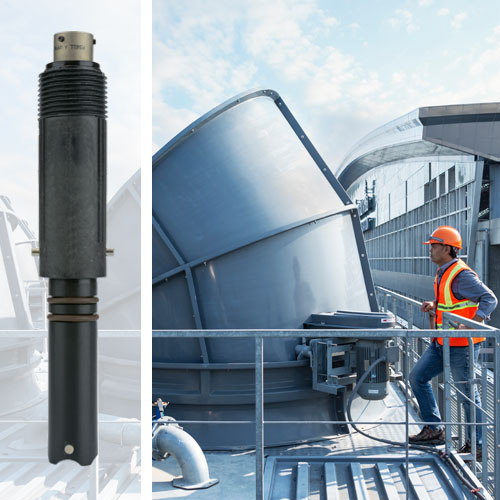
Oxidation-reduction potential (ORP or REDOX) monitoring and control is a required parameter throughout the power generation process. With proper baseline data and understanding of the water matrix, ORP is a useful tool to prevent catastrophic feed water corrosion in ferrous and similar piping systems. It is desirable to maintain a constant reducing environment in this process water (oxygen scavenging treatment) and ORP monitoring provides assurance. For example, nuclear power plants use ORP to control the addition of hydrogen to minimize corrosion and cracking in the reactors. ORP is used in cooling towers where it provides an effective measurement of oxidizing biocides. ORP sensors are installed alongside pH sensors and are monitored continuously throughout the process. Specialized insertions are often needed to enable safe and convenient access to the sensors and prevent outages during maintenance. Sensor maintenance can be minimized with the appropriate sensor design, in particular, the housing material, reference junction, and reference electrolyte. This is critical as sensors are often located in remote areas.
ORP in Cooling Towers