
Turbidity is one of the most widely measured indicators of water quality, yet it is also one of the most misunderstood. Although many people associate turbidity with simply “cloudy water,” it plays a far more important role across environmental science, industrial operations, and drinking water treatment. As a result, organizations across the world rely on NTU, or Nephelometric Turbidity Units, to quantify turbidity accurately and consistently. This article explains how turbidity is measured, what NTU means, and why it remains the global reference for assessing water clarity. We also examine the science of light scattering, discuss measurement standards, and highlight challenges and solutions that improve turbidity monitoring.
What Is Turbidity?
Turbidity refers to the cloudiness or haziness of a liquid caused by suspended particles that scatter and absorb light. Moreover, these particles can be inorganic, organic, biological, or anthropogenic. When turbidity increases, water becomes less transparent, reducing the amount of light passing through it. This parameter matters because clarity is more than a visual characteristic; it reflects the chemical, physical, and biological conditions of a water body. For example, in natural waters, turbidity often increases during storm events when runoff carries silt, clay, and organic debris into rivers and lakes. In industrial environments, turbidity spikes may indicate challenges such as incomplete filtration, equipment malfunction, or contamination.
Common sources of turbidity include:
- Silt and clay from soil erosion.
- Algae and microbial growth.
- Organic matter, such as leaf debris.
- Industrial discharge containing particulates.
- Wastewater effluent.
- Construction site runoff.
Therefore, measuring turbidity gives scientists and engineers a quick and reliable way to evaluate water conditions and detect changes that may affect treatment processes, ecosystems, or public health.
What Are NTUs (Nephelometric Turbidity Units)?
NTU stands for Nephelometric Turbidity Units, the most widely used unit for reporting turbidity. It is based on light scattering at a 90° angle from a focused beam of light passing through water. When suspended particles scatter the incident light, the detector measures the intensity of this scattered light. The instrument then converts the measurement into NTUs, where a higher value indicates cloudier water.
Key points about NTU:
- It is used primarily with nephelometric (90° detection) methods.
- NTU values increase as turbidity increases.
- NTU readings are used worldwide in drinking water, wastewater, environmental monitoring, and industrial applications.
In practice, NTUs provide a simple and standardized way of comparing water clarity between different sites, technologies, and laboratories.
How Turbidity Is Measured
Turbidity is measured using nephelometry, which quantifies light scattering due to the presence of suspended particles. Although the underlying physics can be complex, modern instruments make turbidity measurement straightforward and highly repeatable.
There are two main approaches:
a. Benchtop or Portable Turbidity Meters
Laboratory and field technicians often use handheld or benchtop meters for spot checks or sample analysis. These devices contain:
- A consistent light source (LED or laser).
- A sample chamber.
- One or more photodetectors.
Technicians place water samples in cuvettes, insert them into the instrument, and take readings.
b. Inline or Submersible Optical Sensors
Process industries and treatment plants rely on inline or submerged turbidity sensors to provide real-time, continuous data. These sensors:
- Mount directly into pipes, tanks, or open channels.
- Use digital outputs for integration with SCADA or PLC systems.
- Withstand long-term deployment in harsh environments.
Inline sensors are particularly valuable where monitoring must be automated or where conditions change rapidly, such as in influent streams of water treatment facilities or at environmental monitoring stations.
The Relationship Between Light Scattering and NTU
The core principle behind NTU measurement is that particles scatter light, and the amount of scattering depends on several factors. Although turbidity correlates with suspended solids, NTU does not measure particle count directly; it measures scattering intensity.
Light scattering depends on:
Particle Size
- Fine particles (e.g., clay, microbes) scatter light strongly at 90°, increasing NTU.
- Large particles may scatter light forward rather than sideways.
Particle Shape
Irregular or rough particles scatter light differently from smooth spheres.
Particle Color or Absorptivity
Highly colored particles or dissolved substances can absorb light and reduce scattering, thus complicating interpretation.
Concentration
Higher particle counts cause higher scattering, but at very high concentrations, light may be scattered so much that detectors become saturated. Thus, NTU is a proxy measure of suspended particle content, not a chemical property. Nevertheless, because NTU responds predictably to changes in water quality, it is extremely useful in operational monitoring.
Standards Governing NTU Measurements
Because turbidity is so important to public health and environmental protection, international standards define how NTU must be measured to ensure consistency.
ISO 7027
The use of ISO 7027 is predominant globally, and it specifies:
- Infrared light sources (typically 860–880 nm).
- 90° detection geometry.
- Defined optical properties.
Infrared reduces interference from water color, thus making ISO 7027 ideal for surface waters and wastewater.
EPA Method 180.1
In the United States, drinking water compliance typically uses EPA Method 180.1, which specifies:
- A tungsten lamp in the visible range.
- 90° detection.
Because visible light interacts more strongly with colored waters, EPA 180.1 NTU values may differ from ISO-compliant FNU (Formazin Nephelometric Units) readings.
FNU and FAU
- FNU: Turbidity measurements as per ISO 7027.
- FAU: Turbidity measurements utilizing attenuation methods. Attenuation-based turbidity measurement quantifies the amount of light lost as it passes through a water sample. Instead of measuring scattered light at 90 degrees, this method uses a detector placed directly opposite the light source. As suspended particles absorb or block the beam, the detector registers a reduction in light intensity. Higher particle concentrations result in greater attenuation and, therefore, higher turbidity readings. This approach works well for very turbid or opaque samples where nephelometric side-scatter detectors become overwhelmed, although it is less sensitive to low-level turbidity and fine particles.
Although NTU is the best-known unit, it is part of a family of turbidity metrics tailored to different industries and standards.
Typical NTU Ranges in Different Water Types
Understanding typical NTU values helps operators interpret turbidity readings correctly.
< 1 NTU — Treated drinking water
High-quality drinking water should remain below 0.3–1 NTU to ensure effective disinfection and a crystal-clear appearance.
1–5 NTU — Municipal surface water sources
Lakes and reservoirs often fall within this range during normal conditions.
10–50 NTU — Rivers and lakes
Natural waters vary based on geology, season, and rainfall.

50–200 NTU — Stormwater and runoff
Heavy rainfall rapidly increases turbidity due to erosion and washed sediments.
200+ NTU — Wastewater or industrial discharge
Depending on the treatment stage, wastewater turbidity can range from low to extremely high. Understanding these ranges allows operators to troubleshoot issues quickly and make data-driven adjustments to processes.
Why NTU Matters in Water Quality Monitoring
NTU plays a central role across water quality applications because turbidity affects physical processes, biological growth, and treatment efficiency.
a. Drinking Water Treatment
Turbidity affects disinfectant efficacy, filtration performance, and pathogen removal. Moreover, high NTU can shield microbes from chlorine or UV disinfection. As a result, regulatory agencies set low turbidity limits to protect public health.
b. Environmental and Ecological Health
Turbidity affects aquatic life by limiting light penetration:
- Reduced photosynthesis harms aquatic plants.
- Suspended solids clog fish gills.
- Sedimentation smothers habitats.
NTU, therefore, serves as an early warning indicator for erosion, pollution, algal blooms, and watershed disturbances.
c. Industrial Processes
Industries rely on turbidity monitoring to:
- Detect contamination.
- Ensure process consistency.
- Monitor cooling water clarity.
- Verify discharge compliance.
NTU is especially important where turbidity spikes signal equipment issues, such as filter failure or process upset.
Challenges and Limitations in NTU Measurement
Although NTU is a powerful metric, several challenges can affect accuracy:
Interference from Color
Colored dissolved substances absorb light, causing lower-than-expected readings, especially under EPA Method 180.1.
Air Bubbles
Bubbles scatter light intensely and unpredictably, artificially increasing NTU.
High Turbidity Levels
At extremely high particle concentrations, scattering becomes so intense that detectors saturate, requiring sample dilution.
Sensor Fouling
Biofilm, sediment buildup, or surface contamination can distort optical measurements during long-term deployments.
Instrument Drift
Light-source aging or electronics drift may alter sensitivity over time, requiring regular calibration. Recognizing these limitations helps users maintain accurate monitoring programs and avoid misleading data.
Temperature
Temperature affects NTU measurements by influencing the optical sensor’s components, which can cause inaccuracies if not compensated for. Both the light source (Infrared Laser) and the light-receiving element (photodetector) are affected by temperature fluctuations.
Improving Accuracy with Modern Optical Sensors
Advances in optical technology have significantly improved NTU measurement accuracy, stability, and ease of use.
Infrared Laser Optics
Laser-based systems provide:
- Narrow, stable wavelength output.
- High sensitivity.
- Reduced color interference.
- High repeatability across measurement ranges.
Automatic Wipers and Anti-Fouling Designs
Modern sensors minimize maintenance by using:
- Automated mechanical wipers.
- Hydrophobic coatings.
- Sealed IP68 housings for submerged use.
These features keep optical surfaces clean and reduce drift.
Digital Signal Processing
DSP algorithms improve measurement precision by:
- Filtering noise.
- Correcting for temperature effects.
- Smoothing and validating signal output.
Continuous Inline Monitoring
Real-time turbidity data enables:
- Faster response to treatment issues.
- Automated process control.
- Better visibility into water system dynamics.
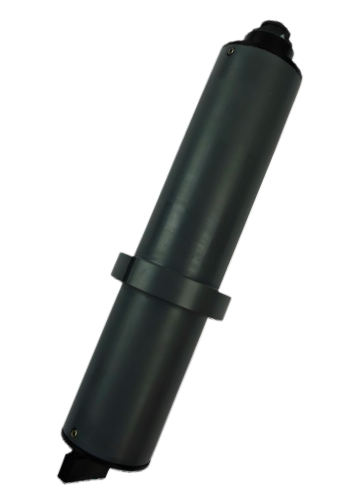
Companies like AlpHa Measurement Solutions have developed advanced optical sensors, such as the TU90, that combine laser nephelometry, automatic cleaning, and robust digital output to deliver stable NTU tracking in demanding environments.
AlpHa’s TU90 Turbidity Sensor: A Next-Generation Solution
AlpHa’s TU90 turbidity sensor stands out among other sensors for its precision, ruggedness, and ease of integration. Designed for both inline and submersible applications, the TU90 combines advanced optical design with intelligent features that minimize maintenance.
Key Features of the TU90
- ISO 7027 Compliant Infrared Optics: Uses an 850 nm laser with a 90° scatter method for internationally recognized accuracy.
- Wide Measurement Range: Available in models covering 0–100 NTU, 0–1500 NTU, and 0–5000 NTU.
- Exceptional Accuracy: ±1% error for low range, <2% for medium, and <4% for high range applications.
- Fast Response: <10 seconds, enabling real-time process control.
- Automatic Cleaning Wiper: Keeps optics clear, even in challenging environments.
- Built-in Temperature Compensation: Algorithm-driven correction ensures accuracy under varying process conditions, and operates efficiently between -5°C and 60°C.
- Durable Construction: Rated for up to 15 bars of pressure and 150 m submersion, with IP68 protection.
Contact AlpHa Measurement Solutions today to learn how the TU90 can elevate your turbidity monitoring program.