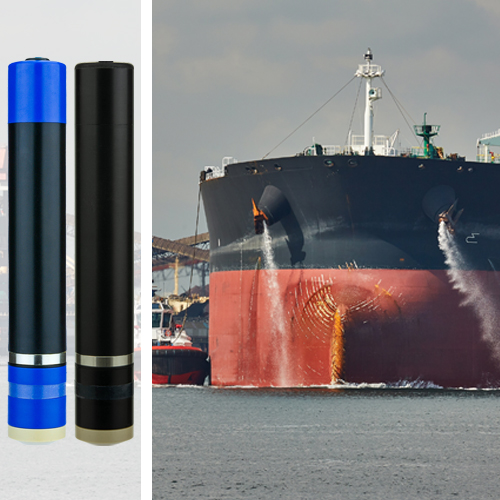
AlpHa’s RC67 and RC68 chlorine sensors offer precise, continuous measurement of free and total chlorine, hence making them ideal for ballast water treatment. Their advanced amperometric technology ensures reliable readings without additional chemical reagents, which is crucial for effective disinfection.
Some features of the RC67 and RC68 include:
Wide Measurement Range: Adjustable from 0-2 ppm to 0-100 ppm.
Versatile Outputs: Supports analog (4-20 mA or 0-5 V) and digital (RS-485 MODBUS RTU) formats.
High Accuracy and Resolution: Provides accuracy of 0.2 ppm or 4% and a resolution of 0.01 ppm.
Temperature Compensation: Integrated to maintain performance across 0 to 50°C.
Low Maintenance: Requires monthly calibration with a quick response time (T90 in 120 seconds).
Robust Design: Constructed from durable materials like PVC, CPVC, ABS, and Ryton.
These features ensure effective chlorine monitoring, critical for preventing the spread of invasive species and meeting international regulations. Since the advent of steel-hulled ships, water continues to serve as ballast to stabilize ships, especially when not fully laden. However, ballast water often contains a plethora of contaminants and organisms that can disrupt ecosystems on introduction. Thus, there is a need to treat this water. Chemical injection is one of the common treatment methods, of which chlorine is a predominant option. The use of Free and Total Chlorine sensors ensures thorough disinfection, as well as compliance with regulations such as IMO standards. 0 – 20ppm or 0 – 100 ppm.
Importance of Chlorine Measurement in Ballast Water Treatment