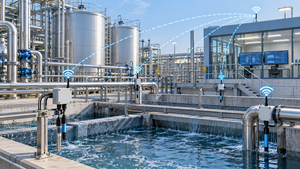
Metal surface finishing plays a critical role in protecting metal components from corrosion, wear, and environmental exposure. Among the many finishing methods in industrial manufacturing, e-coating, or electrocoating, is prominent for its ability to apply a uniform, durable coating across complex part geometries. E-coating is common in automotive, appliance, agriculture, heavy equipment, electronics, and general industrial manufacturing because it provides strong corrosion resistance and consistent film coverage. However, achieving a high-quality metal surface finish depends on carefully controlling several process parameters, with pH being one of the most important.
What is E-Coating?
E-coating is an immersion coating process that uses electrical current to deposit paint or resin particles onto a conductive metal surface. The part is submerged in an aqueous coating bath, and an electric charge causes oppositely charged coating particles to migrate toward the metal substrate, forming a uniform film. The process is often used as a primer or corrosion-resistant base layer before powder coating, liquid painting, or final assembly. Because the part is fully immersed, e-coating can reach recessed areas, edges, cavities, and complex geometries that may be difficult to coat evenly with spray methods.
A typical e-coating process includes:
- Cleaning and degreasing
- Rinsing
- Pretreatment or conversion coating
- E-coat bath immersion
- Post-rinse
- Curing
Each stage must be controlled carefully to support adhesion, coating uniformity, and long-term corrosion performance.
Why pH is Important During E-Coating
The e-coat bath is a carefully balanced chemical system. It typically contains deionized water, paint solids, resins, pigments, additives, and other chemicals required to maintain stable deposition. Because the bath is water-based and electrically active, changes in pH can affect how coating particles behave during deposition.
Proper pH control helps support:
- Stable bath chemistry
- Consistent coating deposition
- Uniform film thickness
- Strong adhesion
- Reduced sediment formation
- Improved corrosion resistance
- Reliable process repeatability
pH is also important during pretreatment. The cleaning, rinsing, and conversion-coating steps prepare the metal surface so the e-coat can bond properly. If pH is not controlled in these stages, soils, oils, residues, or pretreatment chemistry may interfere with coating adhesion.
In short, pH does not work alone. It interacts with conductivity, temperature, solids content, resin concentration, and bath contamination. However, because pH is a leading indicator of chemical balance, it is one of the most valuable parameters to monitor during e-coating operations.
How Incorrect pH Affects E-Coating Quality
When pH drifts outside the recommended range for a specific e-coat chemistry, coating quality may decline quickly. The exact impact depends on the coating system, but common issues include poor adhesion, bath instability, uneven film build, and appearance defects.
| pH Issue | Potential Impact on E-Coating |
| pH too low | Bath imbalance, reduced coating stability, poor film control |
| pH too high | Paint emulsion instability, sediment formation, rough coating appearance |
| Unstable pH | Inconsistent film thickness and reduced process repeatability |
| Pretreatment pH issues | Poor adhesion, contamination carryover, and reduced corrosion protection |
| Poor pH monitoring | Delayed corrective action and increased risk of scrap or rework |
For production environments, these issues can increase material waste, maintenance requirements, downtime, and quality rejects. Continuous or frequent pH measurement helps operators detect changes early and correct bath chemistry before problems affect finished parts.
Challenges of Measuring pH in E-Coating Applications
Although pH measurement is essential, e-coating environments can be difficult for standard sensors. The process involves chemical exposure, suspended solids, high conductivity, and continuous operation. These conditions can contribute to sensor fouling, slower response, or shorter sensor life if the electrode design is not ideal for industrial use.
Common measurement challenges include:
Chemical Exposure
E-coating and pretreatment systems may contain cleaners, acids, alkalis, additives, and conversion coating chemistries that can degrade incompatible sensor materials.
Coating and Solids Buildup
Paint solids, resins, and process residues may accumulate on the sensing surface, thus reducing response time and affecting accuracy.
Temperature Variation
Changes in process temperature can affect pH readings, making temperature compensation important for reliable measurement.
High Conductivity
E-coat baths rely on electrical conductivity for deposition. Sensors used in these environments must maintain stable readings despite the bath’s ionic strength.
Continuous Production Requirements
Many coating lines run for long shifts or continuous production schedules. Reliable sensors help reduce maintenance interruptions and support consistent process control.
Best Practices for Reliable pH Measurement in E-Coating
Reliable pH control requires the right sensor, proper placement, and consistent maintenance. Even a high-quality pH sensor can produce inaccurate readings if calibration, cleaning, or installation is incorrect.
Recommended best practices include:
- Calibrate sensors regularly using fresh pH buffers.
- Clean electrodes to remove coating residue, solids, and chemical buildup.
- Use temperature compensation to improve measurement accuracy.
- Install sensors in representative locations with consistent flow or mixing.
- Avoid locations where air bubbles, sediment, or stagnant solution may affect readings.
- Inspect sensors for physical damage, coating, or reference contamination.
- Replace sensors before excessive drift affects process control.
For critical e-coating operations, continuous pH monitoring can provide real-time visibility into bath conditions and allow faster corrective action than manual testing alone.
How AlpHa Measurement Solutions Supports E-Coating and Metal Finishing
E-coating requires dependable measurement technology because small chemistry changes can affect coating quality, bath stability, and production efficiency. AlpHa Measurement Solutions offers standard and customizable pH sensors designed to support reliable liquid analysis in demanding industrial environments. AlpHa’s technical team develops and manufactures electrochemical sensors, analyzers, meters, transmitters, and custom liquid measurement solutions for industrial applications.

For e-coating and related metal finishing processes, AlpHa’s pH sensor features help improve measurement reliability in water-based coating baths, pretreatment systems, rinse stages, and supporting process lines.
Key features include:
- Wide pH Range: Measures from 0 to 14 pH, supporting a broad range of cleaning, pretreatment, rinse, and coating bath conditions.
- High Accuracy: Accuracy of ±0.02 pH helps operators make confident bath adjustments and maintain consistent process conditions.
- Fast Response Time: Readings in approximately 10 seconds help operators identify changes quickly and reduce delayed corrective action.
- Minimal Drift: Low drift of ±0.05 pH over 24 hours supports stable monitoring and reduces the risk of gradual measurement error.
- Wide Temperature Range: Operation from -5°C to 135°C helps support processes with changing or elevated bath temperatures.
- Custom Mechanical Assemblies: Sensor configurations can be tailored for tanks, flow-through systems, immersion assemblies, and OEM integration.
- Chemical-Compatible Housing Materials: Options such as Ryton®, Epoxy, and Kynar® help match the sensor body to the process chemistry.
- Advanced Reference Systems: Single and double-junction reference designs support stable measurements and help reduce contamination-related issues.
Because e-coating lines vary by chemistry, part geometry, production volume, and control strategy, customization can be especially valuable. AlpHa’s ability to design, test, validate, and refine sensor solutions helps manufacturers choose instrumentation that fits the specific requirements of their coating process.
Frequently Asked Questions on pH Measurement in Metal Surface Finishing
No. Both processes use electrical current, but they deposit different materials. Electroplating deposits a metal coating onto a conductive surface, while e-coating deposits paint or resin particles onto a metal part.
In addition to pH, e-coating operations commonly monitor conductivity, temperature, solids content, voltage, current, ultrafiltration performance, and contamination levels.
Yes. pH measurement helps identify chemical imbalance before it causes defects such as poor adhesion, unstable film build, rough appearance, sediment formation, or reduced corrosion protection.