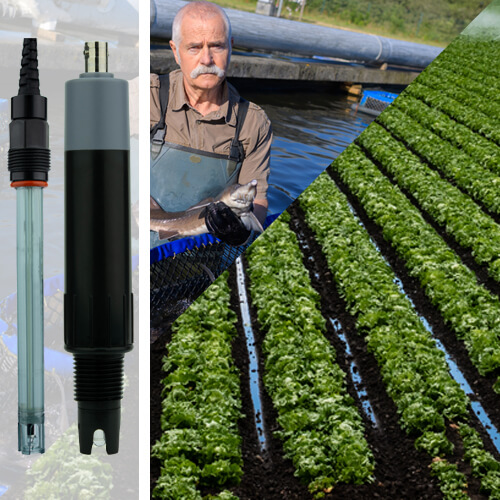
In order to ensure the health of aquaculture and agriculture environments, pH measurement needs to be accurate and concise. The quality of the biological environment is dependent upon optimal pH levels. Even the smallest of deviations can cause stress and illness.
In fish farming facilities, open sea fish farms and even aquariums, pH changes may be the first indication of nitrogen cycle (ammonia) problems and are easy to monitor on a continuous basis. Low-levels of pH can lead to the accumulation of toxic ammonia, where as high levels can cause breakdown of fish gills leading to respiratory failure. Even the smallest of contaminants in commercial and residential aquariums can be deadly to expensive fish and plants.
pH is a critical measurement for both soil-based agriculture and water-based hydroponic applications. Unlike hydroponic applications, soil pH measurement requires methodologies that create slurries or “mud” samples. Both applications use pH measurements to determine mitigation strategies including fertilizer and nutrient needs. If soils or hydroponic solutions are outside the target pH range, it can severely affect plant growth, nutrient, and elemental absorption.
These challenges can be mitigated with the optimal sensor design, in particular the reference junction design, housing material, and sensing chemistry.