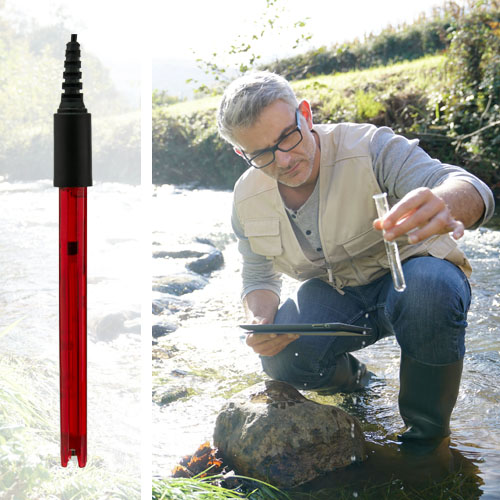
Oxidation-reduction potential (ORP or REDOX) is a measure of whether a sample of water is in an oxidative state or reductive state. Baselining the ORP measurement of a water resource over an extended period of time is important to gain an understanding of what values are normal. ORP can change seasonally as the body of water responds to changes in weather, temperature, flows, and other impacts. Specific applications in environmental monitoring like wastewater effluent, mining operations, agriculture runoff, and stormwater drainage utilize ORP to detect abnormalities. These abnormalities can be further investigated using additional water quality diagnostic tools.
Environmental monitoring applications measure ORP in the field or as grab samples in a lab. Remote stations require multiparameter sondes that continuously measure ORP, log data, and transmit wirelessly. ORP sensor application challenges in environmental monitoring include sensor biofouling (algae coating) and reference junction contamination. These challenges can be mitigated with the optimal sensor design, in particular the reference junction design, housing material, and sensing element.