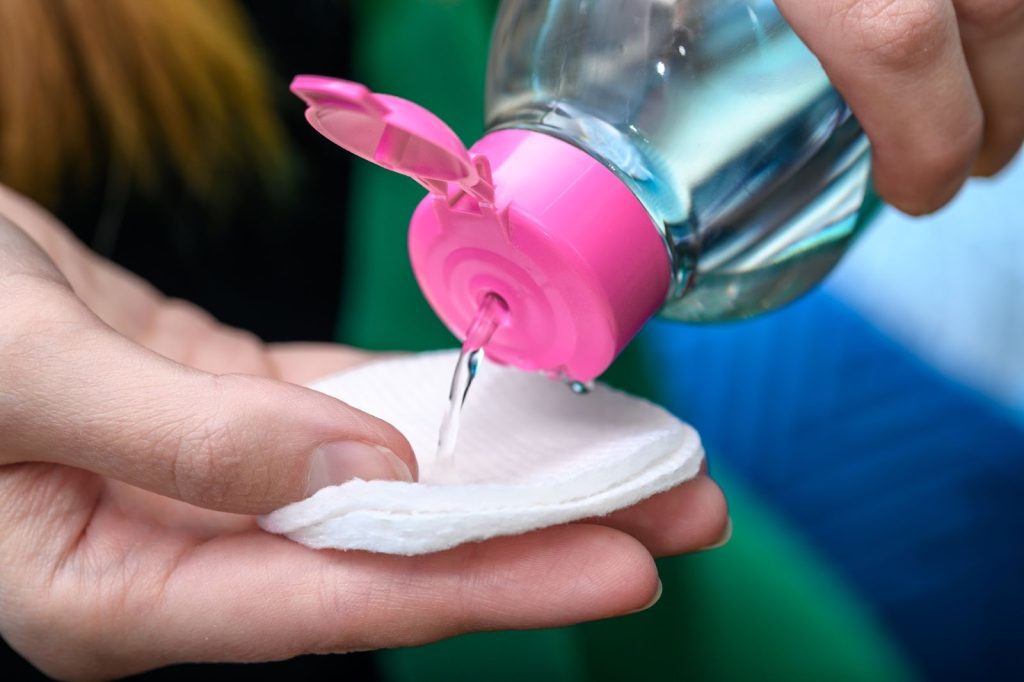
Micellar water, popular for its gentle cleansing properties, is making waves in environmental science, but not in a good way. Once thought to be harmless because of their widespread use in cosmetics and cleaning products, micellar-based compounds are now emerging as pollutants with lasting impacts on water quality. Their stable chemical structures enable them to trap dirt and oils, as well as resist natural breakdown processes. Thus, making them difficult to remove from wastewater. This article explores micellar water side effects, challenges in detection, remediation strategies, and deployment of measurement technologies.
What Is Micellar Water, How it Enters the Environment, and Its Side Effects?
At its core, micellar water is a solution of micelles, which are tiny spherical structures formed when amphiphilic molecules (surfactants) organize in water. Each micelle has hydrophilic “heads” that face outward toward water and hydrophobic “tails” that cluster inward, trapping oils and impurities. This unique chemistry explains why micellar water has become a popular ingredient in cosmetics, detergents, and industrial cleaning solutions.
Unfortunately, these same properties make micelles persistent once they enter the environment. Unlike many compounds that degrade or dilute quickly in water, micelles remain stable above the critical micelle concentration (CMC). They can bind pollutants, bypass filtration systems, and even interfere with natural microbial breakdown.
The main environmental sources of micellar water include:
- Households: Cosmetic rinses, makeup removers, and personal care products washed down the drain.
- Industrial Cleaning: Surfactant-heavy formulations used in manufacturing and processing facilities.
- Wastewater Effluent: Discharges from treatment plants that fail to fully remove surfactant residues.
- Stormwater Runoff: Detergents and cleaning products entering waterways after rainfall events.
In short, what makes micellar water useful in the bathroom or factory floor also makes it problematic for ecosystems.
How Micellar Water Affects Water Quality
At first glance, micellar water seems harmless because it is clear, mild, and widely used. However, once released into rivers, lakes, or treatment systems, its effects on water chemistry and biology can be significant.
1. Increased Turbidity
Micelles scatter light in water, increasing turbidity. Even when not visible to the naked eye, this cloudiness reduces water clarity, interfering with aquatic plant photosynthesis and ecosystem balance.
2. Altered pH Levels
Depending on the surfactant’s chemical profile, micellar solutions can shift water pH toward acidic or alkaline extremes. This destabilizes aquatic environments where many species depend on narrow pH ranges for survival.
3. Clogged Filtration Systems
Because of their size and stability, micelles often bypass conventional filtration. They can clog membranes, reduce efficiency, and drive up maintenance costs in both industrial and municipal treatment plants.
4. Stress on Aquatic Life
Surfactant residues from micelles can damage fish gills, amphibian skin, and microbial communities. These disruptions ripple across food chains, affecting biodiversity and long-term ecosystem health.
5. Higher Chemical Oxygen Demand (COD)
Micellar-bound contaminants increase organic load in water. This elevates COD, reduces available oxygen, and further stresses aquatic systems.
In essence, micellar water changes both the chemical balance and biological resilience of aquatic environments.
Why Detecting Micellar Water Side Effects Is Difficult
Micelles are not straightforward to monitor. Unlike heavy metals or nitrates, they don’t have a distinct, stable signature. Instead, they exist as dynamic clusters that can change with concentration, temperature, and pH.
To address these challenges, scientists rely on multiple detection parameters, with the following sections highlighting some of them.
Turbidity Measurements
Since micelles scatter light, turbidity sensors can provide early warnings of contamination. However, sensitivity drops when particle sizes fall below detection thresholds.
pH Monitoring to Avoid Micellar Water Side Effects
Surfactant residues often shift water pH slightly. Regular pH monitoring can help detect abnormal changes, particularly in closed-loop systems where baseline values are stable.
Fluorescence Detection
This is one of the most powerful methods. Many micelles bind fluorescent molecules, making them highly detectable with optical sensors. Fluorescence-based systems can pick up even trace contamination and track micelle concentration over time.
Surface Tension and Conductivity
Micelles alter both surface tension and conductivity, offering indirect clues. While less precise, these methods can complement other sensor readings in a holistic water monitoring program.
Remediation Methods for Micellar Water Pollution
Detecting micellar water is only half the battle. The next challenge is removing it effectively. Because micelles are designed for stability, treatment requires targeted approaches.
1. Membrane Filtration to Prevent Micellar Water Side Effects
Ultrafiltration and nanofiltration can capture micelles but often suffer from fouling, requiring frequent maintenance.
2. Adsorption
Activated carbon and zeolites can bind surfactant molecules, reducing micelle concentration. This method is effective but may require regular media replacement.
3. Advanced Oxidation Processes (AOPs)
Techniques like ozone treatment, hydrogen peroxide, or UV light break down micelles at the molecular level. AOPs are powerful but energy-intensive.
4. Coagulation-Flocculation
Adding coagulants destabilizes micelles, causing them to clump together and settle out. This process is widely used in municipal water treatment.
5. Biological Treatment to Combat Micellar Water Side Effects
Certain microbes can metabolize surfactants, breaking them down slowly. While promising, this method is often too slow for high-volume applications.
Choosing the right remediation strategy depends on water conditions, contamination levels, and treatment goals.
Sensor Solutions for Micellar Water Detection to Mitigate Side Effects: AlpHa’s Role
As concerns about micellar water grow, industries and municipalities need reliable monitoring tools. This is where AlpHa Measurement Solutions delivers real value.
AlpHa’s pH Sensors: Detecting Subtle Shifts from Surfactants
Many micellar water solutions originate from surfactant-based products that alter the pH of the surrounding water, either becoming slightly acidic or alkaline depending on their formulation. These changes can disrupt microbial activity, interfere with natural buffering systems, and complicate downstream treatment processes.
AlpHa’s pH sensors are built for precision and rugged environments, capable of identifying subtle pH changes due to micellar contamination. Some of our exciting features are as follows:
- Wide pH Range: 0 to 14 with ±0.02 pH accuracy
- Fast Response Time: Just 10 seconds for real-time decision-making
- Minimal Drift: Only ±0.05 pH over 24 hours
- Durability Options: Tuff-Tip models for harsh water conditions
- Versatile Configurations: Custom mechanical assemblies and housing materials (Ryton®, Epoxy, Kynar®, etc.)
- Advanced Reference Systems: Single and double junctions for long-term stability
- Output Options: Millivolts, 4–20 mA, and RS-485 MODBUS RTU for seamless integration

AlpHa’s Conductivity Sensors: Tracing Ionic Load from Micellar Compounds
While micelles themselves are neutral aggregates, the surfactants that form them often introduce ions and charged residues into the water. These ionic compounds, including sulfates, chlorides, and quaternary ammonium salts, can significantly alter a system’s conductivity.

At Alpha, our rich conductivity sensor portfolio is suitable for a wide range of industrial processes, including power generation. Some features of our sensor offering include:
- Conductivity measurements ranging from 0.055 µS/cm to 1,000 mS/cm.
- Also able to operate at temperatures from -5 to 200°C.
- Contacting (two, three, and four cell) and inductive types are available.
- A variety of housing material options, such as glass, stainless steel, PTFE, etc.
- Custom mechanical assemblies.
AlpHa’s Turbidity Sensor
AlpHa’s TU90 turbidity sensor is particularly effective in micellar monitoring because it combines advanced infrared laser optics with rugged, field-ready engineering. These features enable the sensor to deliver stable, repeatable measurements in both inline and submersible applications. Hence, it is a great tool in helping avoid micellar water side effects. Other features of our TU90 turbidity sensor include:
- Detects micellar turbidity changes using ISO 7027-compliant infrared laser optics with 90° scatter for high accuracy.
- Fast, real-time response (<10s) captures fluctuations as micelles form and break down.
- Programmable wiper ensures long-term optical clarity, especially in surfactant-rich environments.
- Wide measurement range options available: 0 – 100 NTU, 0 – 1500 NTU, and 0 – 5000 NTU.
- Built-in temperature sensor with algorithm-driven automatic compensation, ensuring accuracy when micellar stability shifts with process conditions..
- The optional calibration tee enables quick, accurate calibration with consistent re-installation results.
- RS-485 MODBUS output for seamless integration with industrial control systems.
- Private labeling options available.
The TU90 makes micellar water monitoring reliable, low-maintenance, and field-ready, thus turning a complex detection challenge into actionable insights.

AlpHa’s Multiparameter Sonde: Integrated Measurement for Limiting Micellar Water Side Effects
Our multiparameter sondes offer integrated measurement of several parameters, customizable to suit your needs, which is ideal for micellar monitoring. Features include:
- pH, ORP, conductivity, temperature, dissolved oxygen, and turbidity.
- Ion-selective electrodes for nitrate, ammonium, chloride, fluoride, calcium, potassium, and more.
- Compact form factors supporting up to nine parameters.
- Multiple output types, including analog and digital (RS-485 MODBUS RTU).
- Connector flexibility with options for MOLEX, tinned leads, Mil-spec, and more.

For more details, please review our website or contact us today.