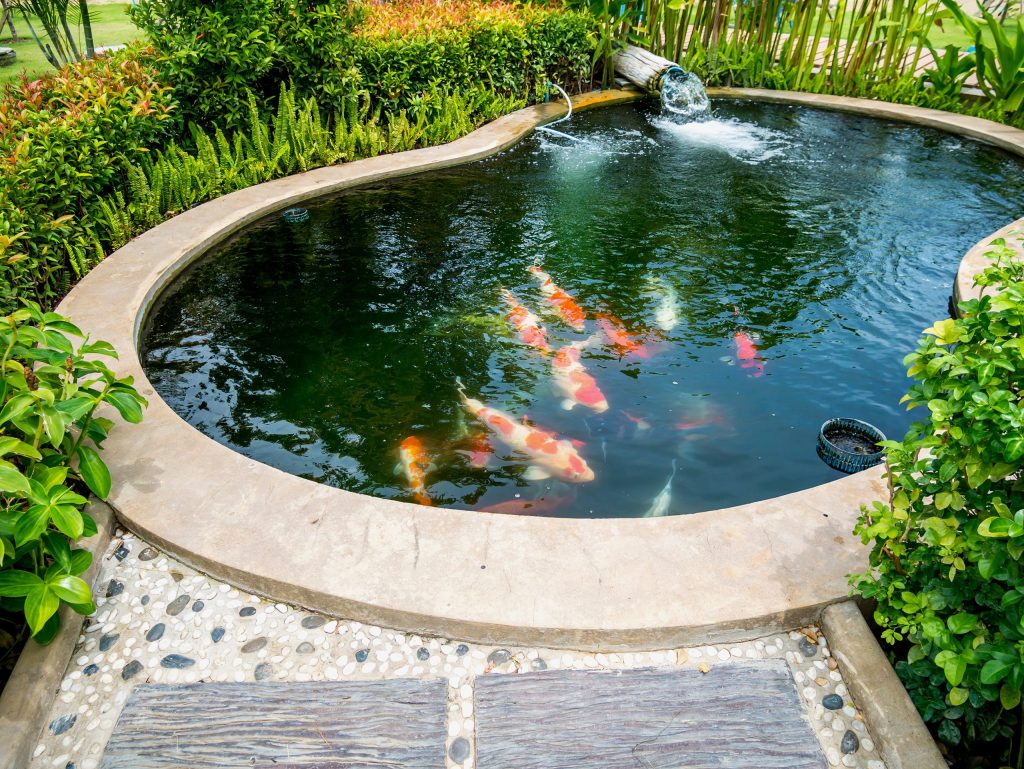
Maintaining high water quality is the foundation of successful fish farming. Whether you’re managing a small backyard pond, a commercial aquaculture facility, or a decorative koi setup, the health and productivity of your fish depend on the water they live in. Generally, poor water quality leads to stress, disease outbreaks, reduced growth rates, and even large-scale fish kills. These outcomes can devastate hobbyists and commercial operators alike. So, understanding and controlling the critical water quality parameters is important, as it ensures that fish thrive in a stable environment. This article explores the key parameters affecting fish pond water quality, how to maintain optimal conditions, and advanced monitoring solutions.
Key Water Quality Parameters in a Fish Pond and Their Impact
Fish are sensitive to even subtle changes in water chemistry. As a result, the following parameters must be closely monitored and maintained within optimal ranges to ensure aquatic health:
溶解氧 (DO)
Dissolved oxygen (DO) is arguably the most critical parameter. Moreover, fish require oxygen for respiration, and most species thrive in levels between 5 and 8 mg/L. Oxygen levels fluctuate due to photosynthesis, respiration, temperature, and organic waste load. Low DO levels lead to stress, low feeding efficiency, and ultimately mortality.
温度
Temperature influences fish metabolism, immune function, and oxygen solubility. Each species has an optimal range—tilapia prefer 24–30°C, while trout require cooler conditions. However, sudden temperature swings or exposure to extreme heat can cause thermal shock and increase disease susceptibility.
Fish Pond Water pH
Generally, the ideal pH for freshwater fish lies between 6.5 and 8.5. Deviations from this range to either high or low pH can affect gill function, ammonia toxicity, and overall metabolic activity. Morning pH levels may be lower due to CO₂ accumulation overnight, while photosynthesis during the day can push pH upward.
Ammonia (NH₃/NH₄⁺)
Ammonia originates from fish waste and uneaten food. Its toxic unionized form increases with higher temperature and pH. Even low concentrations—above 0.05 mg/L—can cause gill damage and death. Hence, biological filtration systems that convert ammonia into very low mg/L levels of nitrites and nitrates are critical in setups exposed to ammonia.
Nitrites (NO₂⁻) and Nitrates (NO₃⁻)
Nitrites are intermediate byproducts in the nitrogen cycle and are harmful at levels exceeding 0.1 mg/L. They impair oxygen transport by forming methemoglobin in fish blood. Nitrates, while less toxic, should be kept below 50 mg/L. Excessive nitrate levels promote algae growth and stress.
Turbidity
Turbidity refers to water cloudiness due to suspended particles, algae, or organic matter. High turbidity reduces light penetration, impairs photosynthesis, and clogs gills. Clear water does not always mean clean water, but persistently murky water signals a need for intervention.
Total Dissolved Solids (TDS) and Salinity
TDS reflects the amount of dissolved ions such as calcium, magnesium, sodium, and chloride. High TDS can interfere with osmoregulation in fish and alter water hardness as well as buffering capacity. In brackish aquaculture systems, salinity must be closely managed to maintain fish health.
Chlorine and Disinfectants
Chlorine, even at concentrations as low as 0.01 mg/L, is highly toxic to fish. It may enter the pond through treated municipal water. Neutralizing agents such as sodium thiosulfate or activated carbon filters are necessary to protect fish during water changes.
Practical Strategies for Maintaining Optimal Fish Pond Water Quality Parameters
Maintaining a stable water environment requires proactive management and routine maintenance. Here are some best practices:
- Aeration: Use paddle wheels or diffused air systems to maintain DO levels above 5 mg/L.
- Feeding Control: Avoid overfeeding, because feed waste decomposes and elevates ammonia.
- Biofiltration: Incorporate nitrifying bacteria to convert ammonia to nitrate.
- Water Exchange: Periodic partial water changes dilute toxins and stabilize parameters.
- pH Buffers: Use lime or commercial buffers to maintain pH within the ideal range.
- Sediment Removal: Regularly clean the pond bottom to eliminate organic buildup.
- Algae Management: Shade structures, UV treatment, and selective algaecides can help control algal blooms.
Monitoring Fish Pond Water Quality: Tools and Technologies
Modern aquaculture demands precision, hence, visual inspections and manual test kits are no longer sufficient. Here’s where electronic sensors and digital platforms elevate water quality management.
Dissolved Oxygen Sensors
Advanced DO sensors provide real-time oxygen concentration feedback. Optical and electrochemical types (galvanic or polarographic) offer rapid response and high accuracy, thus ensuring timely aeration adjustments.
pH and ORP Sensors
These sensors measure acidity/alkalinity and oxidation-reduction potential. Stable pH levels are vital for controlling ammonia toxicity and maintaining microbial balance.
Ammonia and Nitrate Sensors
Ion-selective electrodes allow direct measurement of ammonia, nitrites, and nitrates, critical for managing nutrient loading as well as filter performance.
Turbidity Sensors
Optical sensors quantify water clarity, detecting algal blooms, suspended solids, and waste buildup before they impact fish health.
Temperature and Conductivity Sensors
Temperature sensors ensure fish remain in their thermal comfort zone, while conductivity sensors monitor ionic balance, helping manage TDS and salinity.
Multiparameter Sondes
For advanced operations, multiparameter sondes combine several sensors into one compact device, thus simplifying installation and providing holistic water quality data.
AlpHa Measurement Solutions: Advanced Tools for Monitoring Fish Pond Water Quality Parameters
AlpHa Measurement Solutions offers a wide array of high-precision sensors tailored for water quality management in aquaculture systems. These tools are designed with durability, accuracy, and user customization in mind.
pH Sensors
AlpHa’s pH sensors are built for precision and rugged environments:
- Wide pH Range: 0 to 14 with ±0.02 pH accuracy
- Fast Response Time: Just 10 seconds for real-time decision-making
- Minimal Drift: Only ±0.05 pH over 24 hours
- Durability Options: Tuff-Tip models for harsh water conditions
- Versatile Configurations: Custom mechanical assemblies and housing materials (Ryton®, Epoxy, Kynar®, etc.)
- Advanced Reference Systems: Single and double junctions for long-term stability
- Output Options: Millivolts, 4–20 mA, and RS-485 MODBUS RTU for seamless integration

Dissolved Oxygen Sensors
AlpHa offers both optical and electrochemical DO sensors:
- Optical DO Sensors:
- Range: 0–50 ppm
- Accuracy: ±1–5% depending on range
- Response Time: <35 seconds
- Excellent for biological environments
- Range: 0–50 ppm
- Polarographic & Galvanic DO Sensors:
- Accuracy: ±2%
- Suitable for continuous and grab-sample monitoring
- Built for long-term deployment with robust design
- Accuracy: ±2%

Multiparameter Sondes
AlpHa’s multiparameter sondes offer integrated measurement of:
- pH, ORP, conductivity, temperature, dissolved oxygen, and turbidity
- Ion-selective electrodes for nitrate, ammonium, chloride, fluoride, calcium, potassium, and more
- Compact form factors supporting up to nine parameters
- Multiple output types, including analog and digital (RS-485 MODBUS RTU)
- Connector flexibility with options for MOLEX, tinned leads, Mil-spec, and more
These advanced devices empower aquaculture professionals to streamline operations, detect problems early, as well as ensure water parameters remain within optimal ranges.