Water quality monitoring is crucial for maintaining healthy aquatic ecosystems and ensuring safe drinking water. One of the key parameters in water quality assessment is Colored Dissolved Organic Matter (CDOM). In this article, we explore what CDOM is, how it affects water quality, and monitoring methods, especially using a sensor.
CDOM in Water
Chromophoric Dissolved Organic Matter or Colored Dissolved Organic Matter (CDOM) both refer to a complex mix of organic molecules. It primarily consists of humic substances and fulvic acids, which originate from decaying detritus and organic matter. These substances are leached from natural organic matter and decaying vegetation, entering aquatic ecosystems through various pathways. CDOM plays a critical role in carbon cycling, as it represents a large portion of the dissolved organic carbon (DOC) pool in aquatic environments. Also, it influences water clarity, light absorption, and is a key parameter when assessing water quality.
How CDOM Affects Water Quality
Although CDOM is not toxic in nature, it can have an adverse effect on water quality if in large amounts. Some effects of CDOM are as follows:
- Water Clarity and Light Absorption: High CDOM levels reduce sunlight penetration, impacting aquatic plant growth as well as disrupting photosynthesis. It affects water color by absorbing short wavelength light, particularly in the blue to ultraviolet range, giving water a yellow or brownish tint. This absorption reduces light penetration, which in turn affects photosynthesis and overall water quality.
- Nutrient Availability: CDOM can bind with nutrients as well as trace metals, affecting their bioavailability to aquatic organisms. This can impact nutrient cycles and the overall health of the aquatic ecosystem.
- Disinfection Byproduct Formation: CDOM reacts with disinfectants like chlorine during water treatment, forming disinfection byproducts (DBPs) such as trihalomethanes (THMs) and haloacetic acids (HAAs). These DBPs are carcinogenic and pose risks to human health, thus, making CDOM removal a critical step in water treatment.
- Indicator of Organic Pollution: Elevated CDOM can signal wastewater contamination, agricultural runoff, or industrial discharges.
Sources of CDOM in the Environment
CDOM enters water bodies through natural processes and human activities.
Natural Sources:
- Decomposing Vegetation: Leaves, branches, and plant material release dissolved organic matter into lakes, rivers, and also wetlands.
- Soil Runoff: Rainfall leaches organic compounds from soil, thus, increasing CDOM levels in nearby water bodies.
- Microbial Activity: Bacteria and fungi break down organic matter, releasing dissolved organic compounds into water channels.
Anthropogenic Sources:
- Agricultural Runoff: Fertilizers, pesticides, and organic waste increase CDOM in waterways.
- Wastewater Effluents: Municipal and industrial wastewater discharge introduces organic pollutants.
- Urban Stormwater: Runoff from roads and developed areas carries organic material into rivers and lakes.
Why Monitor CDOM?
Monitoring CDOM levels is crucial due to its significant environmental impacts and indicative properties. As previous sections highlight, it plays a key role in nutrient availability within aquatic ecosystems and can serve as indicators of pollution. Some common applications of CDOM monitoring include:
Drinking Water Treatment
CDOM can interfere with disinfection processes and lead to the formation of harmful byproducts during drinking water treatment. It can react with disinfectants like chlorine, thus, creating disinfection byproducts (DBPs) such as trihalomethanes (THMs) and haloacetic acids (HAAs). These byproducts are carcinogenic and prolonged consumption would result in health issues in humans.
Waste Water Treatment
In wastewater treatment plants CDOM sensor monitoring helps in assessing the effectiveness of treatment processes for removing organic matter. As a result, industries are able to ensure regulatory compliance and minimize environmental footprint.
Ecosystem Management
CDOM influences the fate of organic carbon in aquatic systems, hence, making its monitoring important for understanding climate change impacts. Moreover, CDOM is prone to photochemical degradation and microbial decomposition in the natural environment. Hence, the release of greenhouse gases such as carbon dioxide and methane, which exacerbate global warming. In addition, CDOM sensor monitoring helps assess the impact of land use, tracking pollution sources and monitoring the effectiveness of restoration efforts.
CDOM Monitoring Methods
Since CDOM varies with seasonal changes, land use, and climate events, continuous monitoring is essential for tracking long-term water quality trends. The following sections highlight some common measurement methods.
Spectrophotometry
Spectrophotometry is a traditional laboratory method that measures the absorbance of light by a water sample at different wavelengths. CDOM absorbs light strongly in the ultraviolet (UV) and blue regions of the wavelength spectrum, particularly wavelengths between 250–450 nm. By measuring the absorbance at these wavelengths, researchers can estimate CDOM concentrations. Spectrophotometry is typically performed in a laboratory setting using discrete water samples. Thus, involves sample collection and result cannot be provided in real-time.
Remote Sensing
Remote sensing techniques, such as satellite imagery and aerial drones, serve in the estimation of CDOM concentrations over large areas. This technology relies on the relationship between CDOM and the color of the water, whereby the color signature and light absorption properties in the visible and near-infrared portion of the wavelength spectrum are measured. Algorithms are then used to process the spectral data to estimate CDOM levels across broad spatial scales. This method provides broad spatial coverage but may have limitations in accuracy due to atmospheric effects and other factors. However, it is ideal for historical trend analysis, and for detecting CDOM transport and distribution patterns.
In-Situ CDOM Sensor Monitoring
In-situ CDOM sensor monitoring provides a means to directly measure CDOM in real-time. These sensors typically use optical methods, such as absorbance or fluorescence, to measure CDOM. In-situ sensors can be deployed on buoys, boats, or autonomous underwater vehicles (AUVs) to provide continuous monitoring of CDOM. Many in-situ sensors use UV fluorescence analysis to provide real-time data on CDOM concentrations, thus, making them ideal for continuous monitoring. In comparison to alternative methods, CDOM sensor monitoring offers several advantages including:
- Real-Time, In-Situ Data Collection: Provides continuous measurements without sample collection delays.
- Automated and Continuous Monitoring: Reduces human intervention and also improves long-term data accuracy.
- Higher Spatial and Temporal Resolution: Enables detection of rapid water quality changes.
- Improved Early Warning Systems: Detects sudden spikes in CDOM levels due to contamination events.
How Does CDOM Sensor Monitoring Work?
Although each CDOM sensor manufacturer may have a unique measurement procedure, sensors generally measure following this approach:
- Sensors use optical fluorescence detection to measure CDOM concentration in real-time.
- LED-based sensors emit blue excitation light (e.g., 350–450 nm), and detects CDOM fluorescence at higher wavelengths (e.g., 450–550 nm).
- The system converts readings into CDOM concentration (ppb or mg/L).
AlpHa’s CDOM Sensor: Advancing Water Quality Monitoring
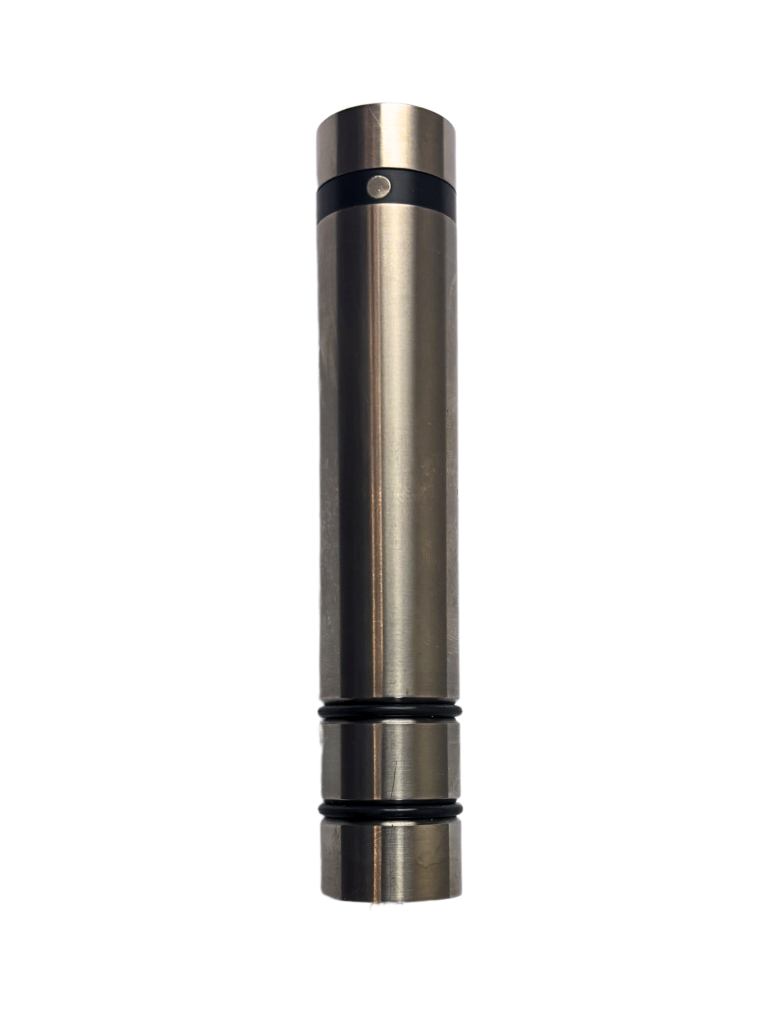
AlpHa’s XC-CDOM sensor is a state-of-the-art solution for real-time CDOM measurement. Using a patent-pending XCite fluorometer technology, this sensor provides unmatched sensitivity and durability for environmental monitoring applications. Key Features of the XC-CDOM Sensor include:
- High Sensitivity: Industry-leading minimum detection limit of < 0.01 ppb, thus, ensuring precise measurements even at low concentrations.
- Flexible Configuration: Available in stand-alone and sonde/cartridge form factors, with customizable options to suit specific application needs.
- Adjustable CDOM Range: Measurement range with sonde configurations from 0 to 650 ppb, while stand-alone units range from 0 to 3,000 ppb.
- Rapid Response Time: Provides efficient data acquisition in both sonde (T100 ~3 seconds) and stand-alone (T100 ~2 seconds) configurations.
- Wide Temperature Range: Operates effectively with temperature compensation within a range of 0 to 50°C.
- High-Pressure Tolerance: Can withstand high-pressure environments, with a maximum pressure rating of 200 meters.
- Durable Materials: Offers several housing material options including titanium, thus, ensuring longevity and resilience in harsh aquatic environment.
- Multiple Communication Options: Supports both analog (0 – 3 V with UART-MODBUS) and digital (RS-485 MODBUS RTU) communication protocols, therefore, providing versatile connectivity.
联系我们 today for both standard and customizable solutions that will improve your water management applications.