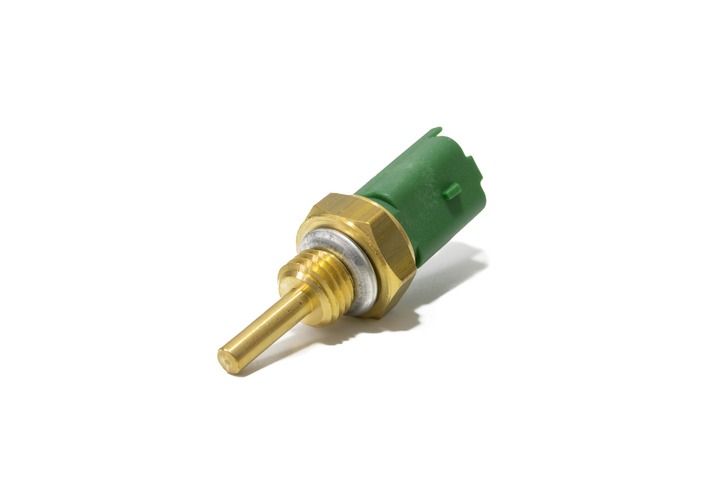
Resistance Temperature Detectors (RTDs) are widely recognized for their accuracy, stability, and repeatability. However, in practice, simply specifying an “RTD” is not enough to guarantee performance. Two RTDs built on the same fundamental principle can behave very differently depending on their construction, materials, and integration into a process. For engineers and operators working in water treatment, chemical processing, or industrial manufacturing, these differences are not theoretical; they directly impact measurement reliability, maintenance cycles, and overall process control. This article takes a practical look at the types of RTD sensors, focusing on how design variations influence performance in real-world environments. Rather than revisiting fundamentals, the emphasis here is on what actually matters when selecting and deploying RTDs in industrial applications.
RTD Sensor Construction: Where the Differences Really Matter
At a high level, most RTDs share the same operating principle. What separates them in the field is the sensor element construction, protection, and how they interface with the measurement system. These design variables influence three critical outcomes: how quickly the sensor responds to temperature changes, how well it withstands environmental stress, and how stable it remains over time. In controlled environments, these differences may seem minor. In industrial settings, they often determine whether a sensor performs reliably or becomes a recurring maintenance issue.
Understanding RTD types, therefore, starts with understanding construction.
Types of RTD Sensors by Construction
Thin-Film RTDs
Thin-film RTDs are common in modern industrial applications. They are manufactured by depositing a very thin layer of platinum onto a ceramic substrate, creating a compact and efficient sensing element. Because of their low thermal mass, thin-film RTDs respond quickly to temperature changes. This makes them ideal for processes where temperature fluctuations occur rapidly or where real-time responsiveness is important. Their compact size also allows for easy integration into smaller assemblies and OEM equipment.
From a cost perspective, thin-film RTDs are typically more economical than other designs, which contributes to their widespread adoption. However, this design does come with trade-offs. In environments with significant thermal cycling or mechanical stress, thin-film elements may exhibit slightly greater drift over time than more robust constructions. For many applications, this is negligible, but in high-precision or highly dynamic environments, it becomes a consideration.

Wire-Wound RTDs
Wire-wound RTDs represent the benchmark for accuracy and stability. In this design, a fine platinum wire is carefully wound and embedded within a ceramic or glass core. This construction minimizes internal stress and provides exceptional measurement consistency. The result is a sensor that delivers highly repeatable readings over long periods, even in demanding environments. This is why wire-wound RTDs are common in laboratory settings, calibration standards, and industrial processes where precision is critical. They also perform well over a wider temperature range, maintaining stability where other designs may begin to deviate.
The trade-off primarily concerns size, cost, and response time. Because of their higher mass, wire-wound RTDs tend to respond more slowly to temperature changes. They are also more expensive to manufacture and require more careful handling during installation. That said, when long-term accuracy and reliability are the priority, wire-wound RTDs remain the preferred choice.
Coiled Element and Strain-Free RTDs
This is a more specialized variation of the wire-wound design that focuses on minimizing mechanical strain within the sensing element. In this configuration, the platinum element is mounted so that it can expand and contract freely with temperature changes. This seemingly small design adjustment has a meaningful impact because by reducing mechanical stress, these RTDs exhibit lower drift over time and improved stability in environments where vibration, pressure fluctuations, or thermal expansion are present. Applications involving frequent temperature cycling or mechanical movement benefit significantly from this design. In these cases, long-term reliability is less about initial accuracy and more about maintaining consistent performance over time.
Material Selection: Beyond the Sensing Element
While platinum is the standard material for RTD sensing elements, the surrounding materials often play an equally important role in overall performance.
The sheath or housing material, for example, determines how well the sensor withstands its environment. In general industrial applications, stainless steel provides a balance of durability and corrosion resistance. In more aggressive chemical environments, polymer-based materials such as PTFE may be necessary to prevent degradation. For extreme temperatures or highly corrosive processes, specialty alloys may be necessary. Insulation and fill materials also influence performance. These materials affect thermal conductivity, which impacts response time, and electrical isolation, which affects signal integrity. Poor material selection in these areas can introduce lag, noise, or long-term instability. In practice, many RTD performance issues do not originate from the sensing element itself, but from mismatches between the sensor’s materials and the application environment.
Impact of Lead Wire Configuration on Accuracy
Another often-overlooked factor in RTD performance is the lead wire configuration. While it may seem like a minor detail, wiring directly affects measurement accuracy, particularly in industrial installations where cable lengths can be significant.
- A 2-wire configuration is the simplest but introduces error due to lead resistance, making it less suitable for precision applications.
- A 3-wire configuration compensates for much of this error and is commonly used as the industrial standard.
- A 4-wire configuration provides the highest accuracy by fully eliminating the impact of lead resistance, making it ideal for laboratory or high-precision environments.
In short cable runs, the difference may be minimal. Over longer distances or in critical measurements, the choice of wiring configuration becomes much more significant.
Practical Considerations in Selecting the Right RTD Types
Selecting an RTD is rarely about choosing the most accurate option on paper. Instead, it involves balancing multiple factors that influence performance after installation.
Environmental conditions are often the first consideration. Exposure to chemicals, pressure, or extreme temperatures can quickly limit the range of suitable materials and design options. Installation constraints, such as insertion depth and mounting requirements, further narrow the selection.
Response time is another key factor. Some processes require rapid detection of temperature changes, while others prioritize stability over speed. Maintenance expectations also play a role, particularly in applications where sensor access is limited or downtime is costly.
Finally, integration with existing systems must be considered. Compatibility with transmitters, controllers, and broader measurement systems is essential for ensuring reliable data and seamless operation.
In practice, the most effective RTD is not the one with the best specifications, but the one that performs consistently within the specific conditions of the application.
RTDs in Water and Industrial Measurement
For most industries, temperature measurement is not an isolated parameter. It directly influences the accuracy of other critical measurements, including pH, conductivity, and dissolved oxygen. In water quality monitoring, for example, temperature affects chemical equilibrium, biological activity, and sensor compensation algorithms. A small temperature error can cascade into larger inaccuracies across multiple parameters. Because of this, RTDs are often integrated into multiparameter systems rather than deployed as standalone devices. Their role is not just to measure temperature, but to ensure the accuracy of the entire measurement ecosystem. This system-level perspective is essential in industrial environments, where reliable data drives both compliance and operational efficiency.
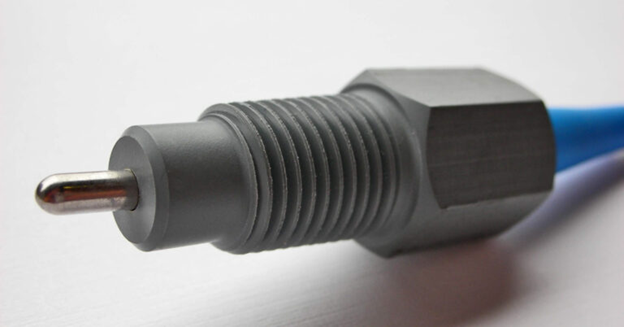
AlpHa’s Temperature Sensor Capabilities
At AlpHa Measurement Solutions, temperature sensing is approached as part of a larger measurement challenge. Rather than offering standardized, one-size-fits-all sensors, AlpHa develops solutions that align with the specific requirements of each application.
This includes both RTD and thermistor technologies, integrated into assemblies designed for durability, compatibility, and long-term performance. Whether the requirement is rapid response, high accuracy, or resistance to harsh environments, the focus remains on delivering reliable data where it matters most.
Key capabilities of our temperature sensor include:
- Wide operating ranges with accuracy up to ±0.02°C.
- Custom mechanical assemblies tailored to insertion and mounting requirements.
- Multiple housing material options, including CPVC, stainless steel, and PTFE.
- Integration into multiparameter sondes for comprehensive monitoring.
- Flexible configurations supporting both RTD and thermistor technologies.
For our Pt100 & Pt1000 models:
- Typical response time <90 seconds.
- Temperature range of 0 to 150℃.
- Pressure range of 0 to 150 psi.
- Optimal chemical resistance to acids, bases, and solvents.
- Compatible with a variety of lab meters and transmitters.
By combining sensor expertise with application-specific design, AlpHa ensures that temperature measurement supports the system’s overall performance, not just the sensor itself.