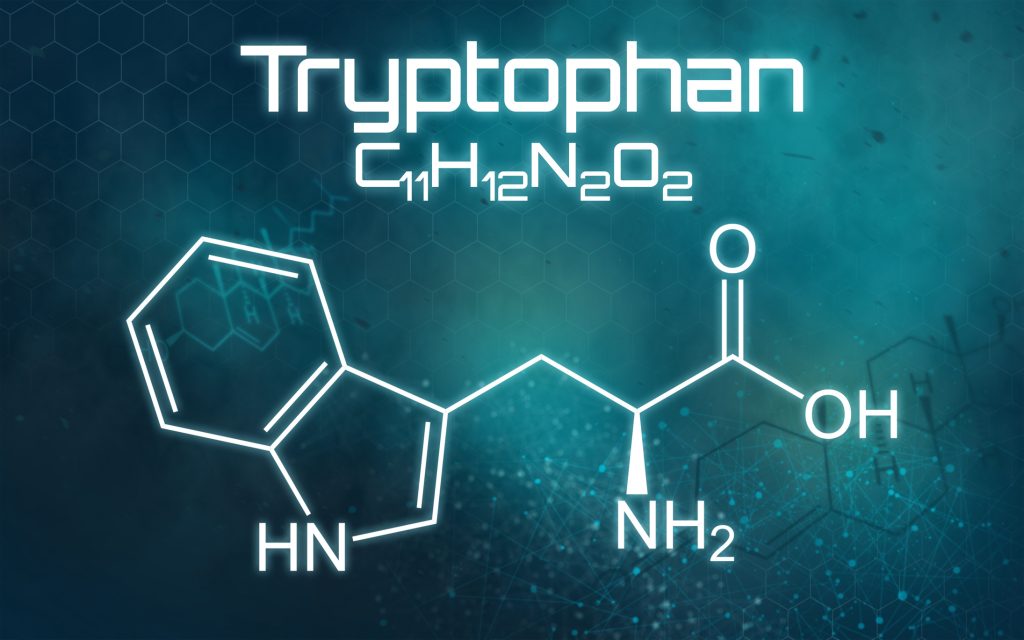
Tryptophan is more than just an essential amino acid found in proteins; it’s also a powerful marker in environmental sensing. With its natural fluorescence properties, tryptophan serves as an early warning indicator of microbial contamination, wastewater intrusion, and organic pollution in aquatic environments. Increasingly, water quality professionals and researchers are turning to tryptophan sensor monitoring as surrogates for more complex, lab-based tests. Examples include fecal coliform detection and BOD estimation.
This article examines the fundamental principles underlying tryptophan sensors, their design and operational mechanisms, and how they’re revolutionizing environmental monitoring and academic research. We will also discuss AlpHa Measurement Solutions’ latest innovation—the XC-TRYP sensor—a next-generation tryptophan fluorometer designed for precision, speed, and usability.
What Is Tryptophan and Why Use a Sensor to Monitor It?
Tryptophan is an aromatic amino acid widely present in organic matter, particularly in proteins. When proteins decay or microbial biomass increases in water bodies, tryptophan is released into the water. Moreover, its intrinsic fluorescence, excitable at ~280 nm and emitting around 350 nm, makes it an ideal target for non-invasive optical detection.
Monitoring tryptophan concentrations in water is valuable for several reasons:
- Early detection of microbial activity: A rapid increase in tryptophan fluorescence can indicate the onset of contamination before pathogens are cultured.
- Assessment of organic pollution: Tryptophan acts as a proxy for biodegradable organic matter and biochemical oxygen demand (BOD).
- Wastewater tracking: Also, its presence often signals leakage or discharge of wastewater into freshwater systems.
- Recreational water safety: Tryptophan levels help determine if water is safe for swimming or fishing, especially after storm events or infrastructure failure.
In short, tryptophan monitoring bridges the gap between real-time observation and traditional lab-based testing.
Tryptophan Sensor Working Principle
Tryptophan sensors operate based on fluorescence spectroscopy. They emit a narrow band of ultraviolet light, typically centered around 280 nm, into the water sample. If tryptophan molecules are present, they absorb this excitation energy and emit light at a longer wavelength, usually around 350 nm.
The sensor’s photodetector captures this emitted light, and the intensity of the fluorescence is directly correlated to the concentration of tryptophan in the sample. Advanced sensors incorporate features such as:
- Bandpass optical filters for accurate spectral discrimination.
- Photodiodes or photomultipliers for sensitive light detection.
- Signal amplification and onboard processing to convert light intensity into digital concentration readings.
In practice, tryptophan sensors provide results in parts per billion (ppb), thus allowing detection of even trace-level contamination.
Detection of Microbial Activity and Pollution Using a Tryptophan Sensor
One of the most compelling uses of tryptophan sensors is their role as microbial proxies. Because they respond to proteinaceous organic matter, elevated readings often correlate with high bacterial counts or fresh sewage input.
Tryptophan fluorescence:
- Serves as a stand-in for fecal coliform and E. coli presence.
- Can trigger early alerts in heavy rainfall or flood events.
- Enhances watershed modeling and real-time warning systems.
For utilities and municipalities, this means faster response times and better public health protection.
Applications of Tryptophan Sensors
Tryptophan sensors are versatile tools used across multiple sectors:
Tryptophan Sensor for Drinking Water Monitoring
Detecting tryptophan offers an early indication of microbial contamination in raw water sources. Water utilities utilize these sensors at intake points to detect contamination events before they impact the supply.
Wastewater and Effluent Tracking
Tryptophan sensors assess the performance of biological reactors and clarifiers. A drop in fluorescence indicates the effective removal of biodegradable matter, while spikes may suggest system overload or failure.
Surface Water Quality Assessment
Non-point source pollution, such as runoff from agriculture or storm drains, often increases tryptophan levels in rivers, streams, and lakes. Continuous monitoring can track these impacts over time.
Tryptophan Sensor in Aquaculture and Fisheries
Tryptophan levels help aquaculture managers detect rising microbial stress or decaying organic material that could harm fish health and reduce dissolved oxygen levels.
Industrial Discharge Monitoring
Industries such as food processing and pharmaceuticals release tryptophan-containing organic compounds. Monitoring ensures that discharge meets environmental compliance before reentry into natural water systems.
Advantages of Using Tryptophan Sensors
Tryptophan sensors offer several advantages that make them indispensable in modern water monitoring workflows:
- Non-Invasive, Reagent-Free: No sample prep or chemical reagents required.
- Real-Time Measurements: Rapid feedback supports dynamic decision-making.
- Highly Sensitive: Detects low levels of contamination missed by other methods.
- Field-Deployable: Rugged designs suitable for remote or outdoor use.
- System Integration: Easy to connect with SCADA systems, sondes, and mobile apps.
These attributes enable environmental professionals to respond more quickly to contamination, therefore reducing their reliance on delayed lab analyses.
Limitations and Considerations of Using Tryptophan Sensors
While powerful, tryptophan sensors are not without limitations:
- Interference: Colored dissolved organic matter (CDOM), humic substances, or turbidity can affect signal accuracy.
- Biofouling: Long deployments may require cleaning or anti-fouling strategies.
- Calibration: Periodic recalibration ensures continued accuracy across environmental conditions.
- Complementary Sensors: For a comprehensive picture, tryptophan sensors are best paired with turbidity, pH, ORP, and nitrate sensors.
By accounting for these factors, users can maximize the effectiveness of their monitoring strategy.
For utilities and municipalities, this means faster response times and better public health protection.
AlpHa’s Advanced Tryptophan Sensing Solutions
AlpHa Measurement Solutions brings cutting-edge optical sensing technology to the field with the XC-TRYP fluorometer. Designed for both standalone use and integration with sondes, this sensor delivers lab-grade sensitivity in a rugged, field-ready format.

Alpha’s Tryptophan Sensor (XC-TRYP)
Key strengths include:
- Ultra-Low Detection Limit (< 2 ppb): Ideal for clean water and trace detection applications.
- Measurement Range: 0–5,000 ppb.
- Fast Response Time (~10 seconds): Enables timely intervention.
- Temperature Compensation: Ensures accuracy across varying field conditions (0–50°C).
- Max Pressure Rating: 375 m—ideal for deep or pressurized water systems.
- Flexible Outputs:
- Analog: 0–3 V with UART-MODBUS.
- Digital: RS-485 MODBUS RTU.
- Bluetooth-Ready Integration: Seamlessly pairs with AlpHa’s XCITE Measure App for real-time data logging, visualization, and export.
- Custom Options: Flexible housing, connectors, and form factors for OEM and integrators.
- Form Factors: Available in stand-alone and multiparameter sonde configurations.
- Rugged Housing Options: Titanium standard, with other materials available.
These features enable deployment in a wide range of applications, from wastewater outfalls to alpine lakes.
Whether deployed in environmental research, drinking water security, or wastewater treatment, AlpHa’s tryptophan sensor provides professionals with unmatched accuracy, flexibility, and operational insight.
To learn more about AlpHa’s tryptophan sensing solutions or to request a demo, visit alpha-measure.com.